Trusted Dental Care in Seoul Since 1997 · SNU Dental Alumni · Multilingual Concierge

Dental Guide
How Many Trips to Korea for Dental Implants? A Timeline
How many trips to Korea for dental implants? Osseointegration usually takes about 3-6 months, so most plans span two visits or one long stay and a return.
Schedule a ConsultationHow Many Trips to Korea for Dental Implants? A Timeline
Medically reviewed by Dr. Kim Jeong-chan, Dentist, Representative Director, Dongdaemun Dental Clinic
If you are considering dental implants in Seoul, the practical question that shapes your entire trip is deceptively simple: how many times will you need to fly to Korea, and for how long? The honest answer is that it depends on your case, but it follows a predictable biological rhythm. Dental implants are not installed like a shelf bracket; they rely on your bone growing around a titanium fixture over a period of months. That healing timeline, more than anything else, determines whether your treatment fits into one long stay, two separate trips, or something in between.
This guide explains the standard implant timeline, why it usually points to two trips, when a single visit might be feasible, and how to plan realistically around healing, work, and travel. It avoids prices and guarantees, because both depend on factors only an in-person examination can establish. What it offers instead is a clear mental model of the schedule, so you can have an informed conversation with the clinic about your own plan.
Why the Timeline Is About Biology, Not Convenience
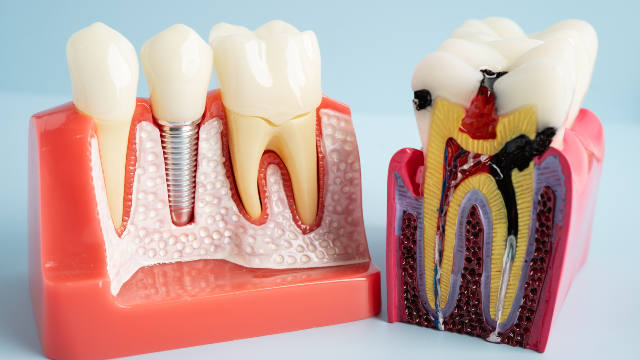
A dental implant has three basic parts: a titanium fixture placed in the jawbone, an abutment that connects to it, and a crown (the visible tooth) on top. The step that governs the calendar is what happens between placing the fixture and loading the final crown. The bone must bond directly to the implant surface in a process called osseointegration. As described in clinical references such as StatPearls, osseointegration is the direct structural and functional connection between living bone and the surface of a load-bearing implant, and it is what gives an implant its stability.
That bonding takes time, and it cannot be rushed by wishing. This is why implant treatment is usually staged rather than completed in a single sitting. If a permanent crown were loaded onto a fixture before the bone had integrated, the extra force could compromise healing. So the calendar you plan around is really your body's healing calendar, and understanding that up front prevents the disappointment of expecting a finished smile in a single week.
The Standard Implant Timeline, Step by Step
While every case differs, a typical implant journey moves through recognizable stages. Knowing them helps you see where the natural breakpoints for travel fall.
- Consultation and planning. The process begins with an examination, imaging such as X-rays or 3D scans, and a discussion of your goals and health history. This is where candidacy is determined and a personalized plan is drawn up.
- Any preparatory work. Some patients need a tooth extracted, or a bone graft or sinus lift to build up enough bone to support an implant. When preparatory work is needed, it typically adds its own healing months before the fixture can go in.
- Fixture placement (implant surgery). The titanium fixture is placed in the jaw. This is the surgical milestone that starts the osseointegration clock.
- Osseointegration (healing). The bone integrates with the fixture. This phase commonly runs about 3 to 6 months, though the exact window depends on your bone quality, the site, and your overall health.
- Abutment and final restoration. Once integration is confirmed, the abutment and the final crown are fitted, completing the tooth. Modern digital tools, including intraoral scanners and CAD/CAM fabrication, can streamline the restoration steps.
- Maintenance. After treatment, ongoing hygiene and check-ups protect the investment for the long term.
The single most important number in that list is the 3-to-6-month healing gap. Because you generally cannot compress it, it is the reason most international implant treatment is planned as two phases separated by that healing period.
So How Many Trips? The Two-Trip Model
For most international patients, the natural rhythm of implant care produces a two-trip plan:
Trip one covers the consultation, any necessary extractions or preparatory work, and placement of the implant fixture. You then return home and let osseointegration happen over the following months, staying in contact with the clinic and following aftercare instructions.
Trip two, typically 3 to 6 months later, covers confirming that the implant has integrated and fitting the abutment and final crown. Because the restoration steps are shorter than the surgical and healing phases, the second visit is often briefer than the first.
This two-trip structure exists precisely because the healing months in the middle do not have to happen in Korea. You can do them at home, living your normal life, which for many working adults is more practical than an extended stay abroad. The trade-off is two sets of flights and two travel windows to coordinate.
The One-Long-Stay Alternative
Some patients prefer to consolidate treatment into a single extended stay rather than making two trips. In this model, you remain in or near Seoul through the healing period so that placement and final restoration happen on the same trip. This can appeal to retirees, remote workers, or anyone who would rather not fly twice, and it removes the logistics of coordinating a return.
The obvious cost is time away from home, since you would be accommodating the full multi-month healing window abroad. There is also a hybrid version that many patients find sensible: one longer initial stay to complete surgery and get past the early healing phase, then a shorter return trip later for the final crown. Which approach suits you depends on your job flexibility, budget for accommodation, family situation, and personal preference, all of which are worth discussing candidly with the clinic when you plan.
What About Same-Day or Immediate-Load Implants?
You may have seen marketing for "same-day teeth" or immediate-load implants, where a temporary tooth is attached to the fixture much sooner than the traditional healing gap. These protocols are real, but they are not universal, and they are the exception rather than the rule.
Evidence summarized in systematic reviews, including Cochrane work on loading protocols, indicates that it is possible to load implants immediately or early in selected patients, but success depends heavily on conditions such as achieving strong initial (primary) stability of the fixture at placement. Not every patient, every jaw, or every clinical situation qualifies, and even in favorable cases, an immediately loaded implant may still receive its definitive restoration later. In other words, immediate loading can sometimes shorten the visible timeline for the right candidate, but it does not eliminate the underlying need for the bone to integrate, and it is not something to assume you will be offered. Whether it is appropriate for you can only be judged by an in-person examination.
Building a Realistic Plan Around Your Life
Because the timeline is driven by healing, the smartest planning starts with the constraints in your own life and works backward:
- Map your two travel windows early. If you are likely to be a two-trip patient, sketch the approximate dates for both the surgical trip and the restoration trip, keeping the 3-to-6-month gap in mind, before you book anything.
- Account for preparatory work. If you may need an extraction, bone graft, or sinus lift, remember that these can add healing months of their own, which can shift or lengthen the schedule.
- Coordinate remote check-ins. Ask how the clinic prefers to stay in touch during your at-home healing months, so any concern between visits is handled promptly.
- Confirm your personal plan with the clinic. Only an examination can tell you how many visits your case truly requires, how long each will be, and whether any accelerated option applies to you.
You can begin that conversation before you ever board a flight through the Dongdaemun Dental Clinic website, which is a Registered Medical Institution for Attracting Foreign Patients under Korea's Ministry of Health and Welfare and offers English, Japanese, and Chinese translation support. Sharing your history and any recent imaging in advance helps the clinic give you a more concrete sense of your likely schedule.
Setting Expectations: Longevity and Maintenance
It is worth being clear-eyed about what implants can and cannot promise. Well-cared-for implants can serve for many years, and the clinic states that its goal is for implants to last as long as possible; still, implants are not guaranteed to last forever. Longevity varies from person to person and depends on factors such as oral hygiene, bone health, systemic conditions, and consistent maintenance. Complications, including peri-implantitis (inflammation and bone loss around an implant) and, in some cases, implant failure, can occur, which is why regular professional care after treatment matters as much as the surgery itself.
This is not a reason to be discouraged; it is a reason to plan for the long term rather than treating the final crown as the finish line. The clinic reports substantial cumulative experience in both implant placement and implant revision, which reflects a practical understanding that real-world outcomes vary and that some patients eventually need repair or maintenance. Results vary, and honest planning includes the maintenance phase, not just the initial timeline. When you are ready to discuss the specifics of your case, you can reach the team through the Dongdaemun Dental Clinic contact page.
Frequently Asked Questions
How many trips to Korea do dental implants usually require?
Most patients follow a two-trip plan: one visit for the implant fixture surgery and a second visit, typically 3 to 6 months later, for the final crown. The gap in between allows the bone to bond to the implant, and that healing can happen at home. Some patients instead choose one long stay, or a longer first trip plus a shorter return; your exact plan depends on your case.
Why can't the whole implant be done in one week?
The limiting step is osseointegration, the process by which your jawbone bonds directly to the titanium fixture. This commonly takes about 3 to 6 months and generally cannot be rushed. Loading a permanent crown before the bone has integrated could compromise the result, which is why treatment is usually staged.
How long is the healing time before the final crown?
Osseointegration commonly takes about 3 to 6 months, though the exact window depends on your bone quality, the implant site, and your overall health. If you also need an extraction, bone graft, or sinus lift, those steps can add healing months of their own. An examination is the only way to estimate your specific timeline.
Are same-day or immediate-load implants an option for me?
They can be, but only for selected patients. Immediate or early loading depends on conditions such as strong initial stability of the fixture, and it is not suitable for every case. Even when a temporary tooth is placed early, the bone still needs to integrate, and the final restoration may come later. Only an in-person exam can determine whether this applies to you.
Can I fly home shortly after implant surgery?
Many patients travel after the initial surgical phase once early recovery is underway, but the right timing depends on the procedure and how you heal. Surgical work such as implant placement or extractions can cause swelling and discomfort, so ask your dentist directly about when it is reasonable to fly after your specific procedure rather than assuming a fixed rule.
Do dental implants last forever?
No. Well-maintained implants can last many years, but longevity is not guaranteed and varies by patient. Oral hygiene, bone health, and regular professional maintenance all affect the outcome, and complications such as peri-implantitis or implant failure can occur. Planning for long-term maintenance is part of a realistic implant plan.
How do I confirm the exact number of visits for my case?
The only reliable way is an examination that includes imaging and a review of your dental and medical history. From that, the clinic can outline how many visits you are likely to need, how long each should take, and whether any accelerated option fits your situation. You can start this conversation remotely before traveling.
The Bottom Line
- Implant timing is driven by osseointegration, which commonly takes about 3 to 6 months between fixture placement and the final crown.
- Most international patients follow a two-trip plan: surgery on the first visit, final restoration on the second, with healing done at home in between.
- Alternatives include one long stay for the whole process or a longer first trip plus a shorter return for the crown; the best fit depends on your work, budget, and preferences.
- Immediate-load or same-day options exist for select cases only, depend on clinical conditions, and are not universal; candidacy requires an in-person exam.
- Implants are not guaranteed to last forever; results vary, maintenance is essential, and complications such as peri-implantitis can occur, so plan for the long term.
This article is for general informational purposes and is not a self-diagnosis tool, nor does it constitute individualized medical advice. Implant candidacy, the number and length of visits, healing time, and expected outcomes can only be determined through an in-person examination with a qualified dentist. Confirm your personal treatment plan directly with the clinic.
More Articles
Continue reading our clinical guides and recovery resources.
Why Bone Graft Implants Matter for Long-Term Dental Health
Learn why Bone Graft Implants support long-term dental health by strengthening the jaw, improving implant stability, and preserving your smile. Learn more.
Learn More

Recovery After Full-Mouth Reconstruction with Implants
Learn what to expect during recovery after Full-Mouth Reconstruction with Implants, including healing, aftercare, diet, and key milestones. Prepare with confidence.
Learn More

How Digital Prosthetic Treatment Works
Learn how Digital Prosthetic Treatment works, from digital scans and planning to custom restorations, improved precision, and comfort. Explore the process today.
Learn More