Trusted Dental Care in Seoul Since 1997 · SNU Dental Alumni · Multilingual Concierge

Dental Guide
Why Bone Graft Implants Matter for Long-Term Dental Health
Learn why Bone Graft Implants support long-term dental health by strengthening the jaw, improving implant stability, and preserving your smile. Learn more.
Schedule a ConsultationUnderstanding Bone Loss and Its Impact on Dental Health
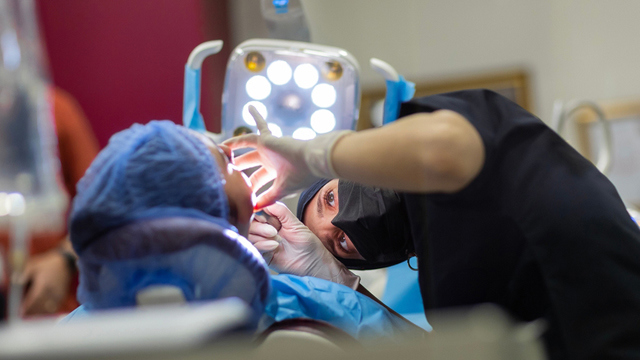
When a tooth is lost, whether from decay, gum disease, trauma, or extraction, the jawbone in that area no longer receives the stimulation it needs from chewing forces. Teeth transmit force through their roots into the surrounding bone every time a person bites or chews, and this ongoing mechanical stimulation is what signals the body to maintain bone density in that area. Once a tooth is gone, that signal disappears, and the bone begins to remodel itself in a way that reduces both height and width over time.
This process, known as alveolar bone resorption, tends to progress most rapidly in the months immediately following tooth loss, but it can continue more gradually for years if the gap is never restored. The rate and extent of bone loss can vary depending on factors such as the cause of tooth loss, the presence of infection at the time of extraction, and individual bone metabolism.
Reduced bone volume creates several downstream problems beyond the immediate cosmetic concern of a sunken appearance along the jawline. It can compromise the fit of dentures or bridges, making them looser and less stable over time. It can alter facial structure by reducing the support that bone once provided for the cheeks and lips. Most relevant for patients considering dental implants, insufficient bone volume can leave too little healthy tissue to anchor an implant securely. Because a dental implant depends on close, stable contact with sufficiently dense bone to fuse properly — a biological process called osseointegration — inadequate bone is one of the most common reasons implant placement must be delayed, modified, or supplemented with additional treatment such as grafting.
What Is a Bone Graft Implant?
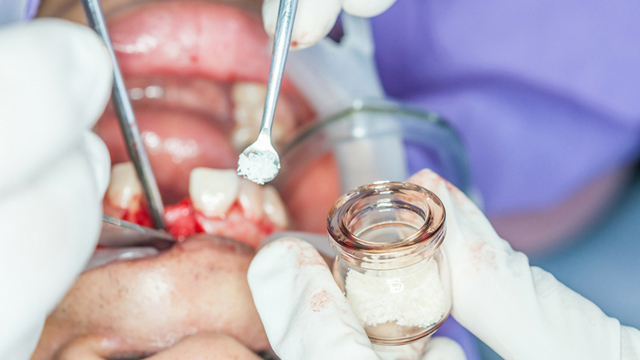
A bone graft implant refers to the combined process of augmenting deficient jawbone with grafting material and then placing a dental implant into that reinforced site, either during the same procedure or in a staged approach, depending on the extent of bone loss. The grafting material acts as a scaffold, encouraging the patient's own bone cells to migrate into and around it over a period of months. Gradually, this scaffold is replaced or integrated with new, living bone, effectively rebuilding the site to a density and volume suitable for supporting an implant long-term.
Types of Grafting Material
Several types of grafting material may be used depending on the clinical situation. Autografts use bone harvested from another site in the patient's own body, which offers strong biological compatibility but requires an additional surgical site. Allografts use processed donor bone from a tissue bank, while xenografts use processed bone from another species, typically bovine. Synthetic graft materials, made from biocompatible substances such as calcium phosphate, are also commonly used. Each material has different handling characteristics, healing timelines, and suitability depending on the size and location of the defect being treated. The choice is made based on the individual's anatomy, the extent of bone loss, and the treatment goals discussed during consultation.
Common Grafting Techniques
There are several grafting techniques used depending on individual anatomy, including guided bone regeneration, in which a barrier membrane is placed over the graft to protect it and direct bone growth; ridge augmentation, which widens or heightens a narrow or short section of jawbone; and sinus lift procedures for the upper jaw, which address cases where the maxillary sinus has expanded downward into the space needed for an implant. The choice of technique depends on where the bone loss has occurred, how extensive it is, and the patient's overall oral health. In every case, the underlying goal is the same: to restore enough healthy, stable bone that the implant can integrate securely and function reliably for years to come.
Who Is a Candidate for Bone Graft Implants?
Not every implant patient requires bone grafting, but it becomes necessary when imaging shows that the existing bone is too thin, too short, or too soft to support an implant on its own. Common candidates include patients who have gone a long period without replacing a missing tooth, allowing resorption to progress; individuals with a history of periodontal (gum) disease that has affected the supporting bone; and those needing implants in the upper back jaw, where the sinus cavity can limit available bone height.
Candidacy is determined through a thorough clinical evaluation, typically including 3D imaging to assess bone volume, density, and quality in the specific area being treated. Patients with well-controlled systemic health, adequate healing capacity, good oral hygiene habits, and realistic expectations about treatment timelines are generally considered good candidates. Factors such as uncontrolled diabetes, certain bone-affecting medications, and heavy smoking can influence healing and may need to be managed before treatment begins. Because every case is different, a personalized consultation remains essential before any treatment plan is finalized.
The Bone Graft Implant Procedure at Dongdaemun Dental Clinic
At Dongdaemun Dental Clinic, the process begins with a comprehensive diagnostic evaluation. The clinic uses a CEREC Primescan intraoral 3D scanner, which captures highly detailed digital impressions without the discomfort of traditional physical molds. This allows the treatment team to precisely assess bone volume, plan the graft site, and design a treatment approach tailored to the individual's anatomy, rather than relying on a one-size-fits-all protocol.
Once imaging confirms the extent of bone loss, the grafting procedure is performed under local anesthesia. The gum tissue at the treatment site is gently opened to access the bone, the grafting material is placed and shaped to fill the deficient area, and the site is typically covered with a protective membrane before the tissue is closed. Depending on the case, the implant may be placed at the same time as the graft, when there is enough existing bone to provide initial stability, or in a later stage once the graft has sufficiently matured and integrated with the patient's natural bone.
Healing time for bone grafts varies, generally ranging from a few months to longer, depending on the size of the graft, the material used, and the patient's individual healing response. During this period, follow-up visits and imaging are used to monitor healing progress and confirm that the site has developed adequate bone density before final implant restoration proceeds. Patience during this phase is important, since placing an implant into a graft site that has not fully matured can compromise long-term stability.
Throughout treatment, the clinic's long-standing partnership with an experienced dental laboratory — in place for more than 20 years — supports the fabrication of restorations designed to fit naturally once the implant is ready for its permanent crown, helping ensure both function and a comfortable bite.
Doctor's Expertise Behind Every Treatment Plan
Treatment planning at Dongdaemun Dental Clinic is led by a team of doctors trained at Seoul National University's College of Dentistry.
Dr. Kim Jeong-chan, Representative Director, completed residency training in periodontics at the Seoul National University Graduate School and has served as a clinical professor in the Department of Periodontics at Seoul National University Dental Hospital. His clinical focus includes complex implant cases such as implant repair, re-surgery, implant removal, bone grafting, and long-term restoration planning. He has also lectured on implant treatment domestically and internationally, including in China, Japan, Pakistan, Australia, and Myanmar, and has hosted seminars addressing both foundational implant techniques and solutions for cases involving previously failed implants.
Dr. Huh Byeong soo, Director, holds a Master's degree in Dentistry from Seoul National University's Graduate School of Dentistry, trained at the Comprehensive Care Clinic of Seoul National University Dental Hospital, and completed an externship at Osaka University's Dental School along with advanced coursework in implant systems.
This combination of academic training and focused clinical experience in bone grafting and implant restoration supports careful, individualized treatment planning for patients with varying degrees of bone loss, including those who may have experienced complications with previous implant treatment elsewhere.
Why Choose Dongdaemun Dental Clinic
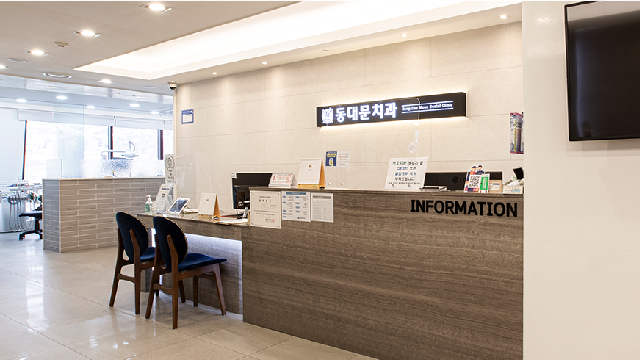
Operating from the same location in Jongno-gu, Seoul since 1997, Dongdaemun Dental Clinic has spent nearly three decades building a track record within its local community, with more than 75% of patients arriving through personal referrals. This continuity matters for procedures like bone grafting, which often involve multiple stages and follow-up visits over an extended timeline — a long-established practice offers patients consistency of care throughout that process.
The clinic combines this long-term clinical experience with modern diagnostic tools, including digital 3D scanning technology, to support precise treatment planning for procedures like bone grafting and implant placement. For international patients, the clinic offers dedicated translation support in English, Japanese, and Chinese, helping ensure that treatment explanations, options, and expectations are communicated clearly regardless of language. The clinic also provides a structured implant warranty program — a 20-year warranty on implant fixtures and a 5-year warranty on implant crowns — subject to regular checkups and maintenance, offering patients an added layer of assurance after treatment is complete.
Recovery, Safety, and Realistic Outcomes
Recovery after bone graft implant surgery varies by individual and by the extent of grafting performed. Mild swelling, discomfort, and bruising in the days following surgery are common and generally manageable with prescribed pain relief and care instructions. Patients are typically advised to follow a soft-food diet temporarily, maintain gentle but consistent oral hygiene around the surgical site, avoid disturbing the area with the tongue or fingers, and avoid smoking, which is known to interfere with bone healing and graft success.
Most patients can resume normal daily activities within a few days, though strenuous exercise and pressure on the treated area are usually restricted for a longer period while the graft stabilizes. Attending all scheduled follow-up appointments allows the treatment team to monitor healing and address any concerns early.
While bone grafting has a well-established record of supporting successful implant integration, outcomes depend on multiple factors, including the patient's overall health, bone quality, adherence to post-procedure care, and consistency with follow-up visits. As with any surgical procedure, no outcome can be guaranteed, and a realistic understanding of healing timelines helps set appropriate expectations from the outset.
For patients experiencing tooth loss or noticeable bone deterioration, consulting a dental professional early — rather than waiting until significant resorption has occurred — can help preserve more treatment options and simplify future care. A thorough evaluation, including diagnostic imaging, remains the most reliable way to understand individual candidacy and treatment timelines before moving forward with bone graft implant care.
More Articles
Continue reading our clinical guides and recovery resources.
Why Bone Graft Implants Matter for Long-Term Dental Health
Learn why Bone Graft Implants support long-term dental health by strengthening the jaw, improving implant stability, and preserving your smile. Learn more.
Learn More

Recovery After Full-Mouth Reconstruction with Implants
Learn what to expect during recovery after Full-Mouth Reconstruction with Implants, including healing, aftercare, diet, and key milestones. Prepare with confidence.
Learn More

How Digital Prosthetic Treatment Works
Learn how Digital Prosthetic Treatment works, from digital scans and planning to custom restorations, improved precision, and comfort. Explore the process today.
Learn More