Trusted Dental Care in Seoul Since 1997 · SNU Dental Alumni · Multilingual Concierge


Dental Guide
Recovery After Full-Mouth Reconstruction with Implants
Learn what to expect during recovery after Full-Mouth Reconstruction with Implants, including healing, aftercare, diet, and key milestones. Prepare with confidence.
Schedule a ConsultationUnderstanding the Condition: When Full-Mouth Reconstruction Becomes Necessary

Full-mouth reconstruction is typically considered when a patient has extensive tooth loss, advanced periodontal disease, severe wear, or multiple failing restorations across the upper and/or lower jaw. Rather than treating individual teeth as separate problems, this approach evaluates the entire bite — how the teeth, gums, jawbone, and jaw joints function together — and rebuilds it as a coordinated system.
Common underlying issues include long-term untreated cavities, chronic gum disease that has led to bone loss, previously failed implants or bridges, and combinations of missing and structurally compromised teeth. Some patients arrive with a history of multiple previous dental treatments that have not resolved their underlying bite problems, while others have avoided dental care for years due to discomfort or anxiety, allowing the condition of their teeth and gums to decline further.
Left unaddressed, these conditions tend to progress rather than stabilize on their own. Bone loss around missing teeth continues over time, gum disease can advance silently before causing pain, and shifting bite forces from missing teeth can accelerate wear on the teeth that remain. This progression means that later treatment often becomes more complex, requiring a greater amount of bone grafting or soft-tissue support before implants can be placed. Early evaluation, even for patients who are unsure whether their case is severe enough to warrant reconstruction, can help clarify treatment options while they remain more straightforward.
What Full-Mouth Reconstruction with Implants Involves
Full-mouth reconstruction with dental implants generally combines several elements: extraction of teeth that cannot be saved, placement of dental implants to replace missing tooth roots, bone grafting where the jawbone has thinned, and the fabrication of implant-supported crowns, bridges, or full-arch prosthetics. The goal is to recreate a stable, functional bite while supporting facial structure and long-term oral health.
Because implants are anchored directly into the jawbone, they function differently from traditional removable dentures. Rather than resting on the gum surface, implants integrate with the bone itself, which helps distribute chewing forces in a way that more closely resembles natural tooth roots. This can translate into more stable, secure function for eating and speaking, along with a reduced risk of the bone resorption that sometimes accompanies long-term denture use.
At Dongdaemun Dental Clinic, treatment planning begins with digital diagnostics using the CEREC Primescan intraoral scanner, which captures highly accurate 3D images of the mouth without the need for traditional physical impressions. This allows the clinical team to evaluate bone quality, tooth positioning, and bite alignment in detail before any surgical step is taken, and gives patients a clearer visual understanding of their own case during consultation.
Who Is a Suitable Candidate
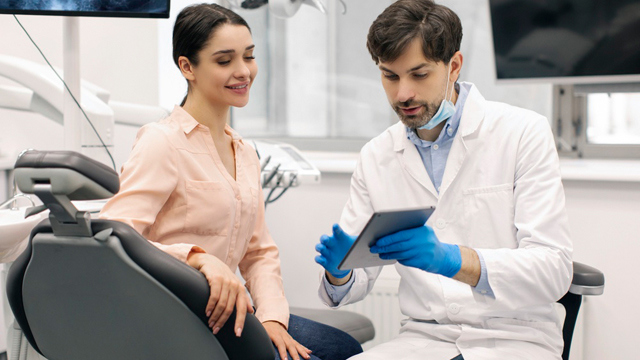
Not every patient with extensive tooth loss requires the same approach, and suitability depends on individual factors. Good candidates for full-mouth reconstruction with implants typically have adequate bone volume for implant placement — or are candidates for bone grafting to build up that volume — along with generally stable overall health that allows for oral surgery and a structured healing period.
Age itself is generally less important than overall health and bone condition; adult patients across a range of ages can be suitable candidates provided their jawbone and general health support the procedure. Patients with uncontrolled systemic conditions, active untreated gum infection, or insufficient bone density may need preparatory treatment, such as bone grafting or periodontal therapy, before implants can be placed. Habits such as smoking can also affect healing and implant success rates, and patients are often advised to discuss this openly during consultation so it can be factored into planning.
A thorough clinical evaluation, supported by digital scanning and imaging, remains the starting point for determining an appropriate treatment path for each patient. This evaluation typically includes a review of medical history, an assessment of remaining teeth and gum health, and imaging to assess bone density and the position of anatomical structures such as nerves and sinuses that must be considered when placing implants.
The Procedure Process: A Step-by-Step Overview
Full-mouth reconstruction with implants is not a single appointment but a staged process that unfolds over weeks to months, depending on individual healing and treatment complexity.
1. Diagnosis and planning. Using digital scanning and imaging, the clinical team maps out the current condition of the teeth, gums, and jawbone, and develops an individualized treatment sequence. This stage often includes a discussion of the expected timeline, so patients understand the sequence of visits ahead of them.
2. Extractions and preparation. Teeth that cannot be preserved are removed, and if bone grafting is required to support future implants, it is carried out at this stage or shortly after. In some cases, a healing period is allowed between extraction and grafting or implant placement to allow the extraction sites to settle.
3. Implant placement. Titanium implant fixtures are surgically placed into the jawbone, where they are given time to integrate with the surrounding bone — a healing process known as osseointegration. Titanium is commonly used for implants because of its long-established biocompatibility with bone tissue.
4. Healing period. This integration phase can take several months, during which temporary restorations may be used to maintain function and appearance while the implants stabilize beneath the surface.
5. Final restoration. Once the implants are confirmed stable, custom crowns, bridges, or full-arch prosthetics are fabricated and fitted, with the clinic's long-standing dental laboratory partnership supporting precise, natural-looking results that are matched to the patient's bite and facial proportions.
6. Follow-up care. Regular checkups help confirm implant stability and the health of surrounding tissue over time, and provide an opportunity to address minor adjustments before they become larger issues.
The Role of Clinical Expertise
Complex, full-arch implant cases benefit from experience across both surgical and restorative dentistry, since success depends on more than the placement of implants alone — it requires coordinated planning between surgical technique, bone management, and final prosthetic design.
Dr. Jeong-chan Kim, Representative Director at Dongdaemun Dental Clinic, is a graduate of Seoul National University's College of Dentistry and completed residency training in periodontics at the Seoul National University Graduate School. He has served as a clinical professor in the Department of Periodontics at Seoul National University Dental Hospital, with a long-standing clinical focus on complex implant cases, including implant repair, re-surgery, implant removal, and bone grafting. He has also presented at international implant conferences in countries including China, Japan, Pakistan, Australia, and Myanmar, and has hosted domestic seminars addressing both foundational implant technique and the correction of failed prior implant cases — experience that is particularly relevant for patients who have had prior implant treatment elsewhere that did not succeed.
Dr. Byeong-soo Huh, Director, holds a Master's degree in Dentistry from Seoul National University's Graduate School of Dentistry, trained at the Comprehensive Care Clinic of Seoul National University Dental Hospital, and completed an externship at Osaka University's Dental School along with advanced coursework in implant systems. Together, this clinical background supports careful case planning for patients undergoing multi-stage, full-mouth implant treatment, where sequencing decisions early in the process can affect outcomes later on.
Hospital Strengths Supporting Reliable Care
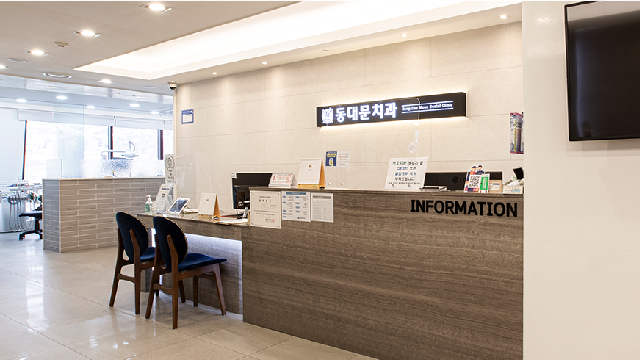
Dongdaemun Dental Clinic has operated from the same location in Jongno-gu, Seoul, since 1997, and more than 75 percent of patients arrive through personal referral — a pattern that reflects sustained relationships with patients over time rather than one-time visits. The clinic uses CEREC Primescan digital scanning technology for precise, comfortable diagnostics, replacing traditional physical impression material with a faster intraoral scanning process. It also works with a dental laboratory that has produced its prosthetics for more than 20 years, supporting consistency in fit and finish across cases.
For international patients, translation support is available in English, Japanese, and Chinese, helping ensure clear communication throughout treatment planning and follow-up — an important consideration for patients coordinating multi-visit treatment from abroad.
The clinic also offers a structured implant warranty program — a 20-year free warranty on implant fixtures and a 5-year free warranty on implant crowns — subject to the clinic's warranty standards and regular checkup requirements. For a treatment that represents a significant long-term investment, this kind of structured aftercare commitment gives patients an added layer of assurance beyond the initial procedure itself.
Recovery, Safety, and Realistic Outcomes
Recovery after full-mouth reconstruction with implants varies by individual, but general patterns are common. In the days following surgery, mild swelling, tenderness, and some difficulty chewing are typical, and patients are usually advised to follow a soft-food diet temporarily, apply cold compresses as needed, and maintain careful oral hygiene around the surgical sites without disturbing healing tissue. Discomfort generally eases within the first one to two weeks, though the deeper healing process — osseointegration of the implants with the jawbone — continues for several months before final restorations are placed.
During this healing window, patients are often advised to avoid smoking, limit strenuous physical activity in the days immediately after surgery, and attend interim checkups so the clinical team can monitor how the surgical sites are progressing. Temporary restorations worn during this period are generally designed to protect the healing implants while still allowing reasonably normal speech and eating.
Attending all scheduled follow-up visits allows the clinical team to monitor healing, confirm implant stability, and address any concerns early. Long-term success depends significantly on consistent oral hygiene, avoiding excessive biting forces on new restorations, and regular checkups after treatment is complete — implants, like natural teeth, require ongoing maintenance and are not entirely maintenance-free once placed.
It is important for patients to understand that outcomes vary based on individual bone quality, overall health, and adherence to post-treatment care instructions. While full-mouth reconstruction can substantially improve chewing function, speech, and appearance, no dental treatment can guarantee identical results for every patient, and healing timelines can differ from one case to the next. A detailed, in-person evaluation remains the most reliable way to understand what outcome is realistic for a specific case.
Final Thoughts
Full-mouth reconstruction with dental implants is a significant undertaking that combines surgical precision, careful planning, and patient commitment to aftercare. It is not a quick fix but a structured process that unfolds in stages, with each phase building toward a stable, functional result. At Dongdaemun Dental Clinic in Seoul, digital diagnostic technology and structured treatment planning support a process designed to be as predictable and comfortable as possible, guided by clinicians with specific experience in complex implant cases. Patients considering this treatment are encouraged to schedule a consultation to discuss their individual condition, candidacy, and expected recovery timeline with the clinical team before deciding on a course of care.
More Articles
Continue reading our clinical guides and recovery resources.
Why Bone Graft Implants Matter for Long-Term Dental Health
Learn why Bone Graft Implants support long-term dental health by strengthening the jaw, improving implant stability, and preserving your smile. Learn more.
Learn More
Recovery After Full-Mouth Reconstruction with Implants
Learn what to expect during recovery after Full-Mouth Reconstruction with Implants, including healing, aftercare, diet, and key milestones. Prepare with confidence.
Learn More

How Digital Prosthetic Treatment Works
Learn how Digital Prosthetic Treatment works, from digital scans and planning to custom restorations, improved precision, and comfort. Explore the process today.
Learn More