Trusted Dental Care in Seoul Since 1997 · SNU Dental Alumni · Multilingual Concierge

Dental Guide
Inside an Implant Revision Practice: A Case-Volume Look
Dongdaemun Dental Clinic reports 1,548+ implant revision procedures. Learn how implant repair differs from new placement and why peri-implantitis matters.
Schedule a ConsultationInside an Implant Revision Practice: A Case-Volume Look
Medically reviewed by Dr. Huh Byeong-soo, Dentist, Dongdaemun Dental Clinic
Most articles about dental implants describe how a new implant is placed: a titanium fixture is set into the jawbone, it heals, and a crown is attached on top. That is the story of a straightforward, first-time case. But there is a second, less-discussed side of implant dentistry — what happens when an existing implant develops a problem, loosens, becomes infected, or fails outright. Repairing or replacing an implant that is already in the mouth is a different kind of work, and clinics that do a lot of it tend to think about implants differently from clinics that only place them.
At Dongdaemun Dental Clinic in Seoul, revision and re-surgery cases are a documented part of the practice. The clinic reports more than 1,548 cumulative implant re-surgery and revision procedures, alongside a much larger count of first-time placements. This article looks at what that kind of case volume does and does not tell you, why repair work is fundamentally different from placement work, and what patients who are worried about a failing implant should understand before they assume anything can simply be "fixed."
To be clear from the outset: implant revision is complex, outcomes vary from person to person, and no result is guaranteed. Case volume is a description of experience, not a promise of success. This article is educational and general; it is not a treatment plan for any individual.
Placement volume and revision volume are not the same thing
It is easy to lump all implant experience together, but placing a brand-new implant and revising an old one draw on overlapping — yet distinct — skills.
A first-time placement usually starts with healthy or manageable conditions. The dentist assesses bone quantity and quality, plans the position with imaging, and installs a fixture into a site that has been prepared for it. There are many judgment calls, but the site is, in a sense, a clean starting point.
A revision case starts from a compromised situation. Something has already happened: the bone around a fixture has been lost, an infection has taken hold, a component has fractured, the implant sits in a less-than-ideal position, or the original restoration has failed. The dentist now has to work around scar tissue, altered anatomy, existing hardware, and often a patient who is anxious and discouraged after a disappointing experience elsewhere.
The clinic reports its cumulative counts separately for this reason. According to the clinic, it has recorded more than 21,588 cumulative dental implant procedures overall and more than 1,548 cumulative implant re-surgery or revision procedures. Those revision cases represent a specific slice of the work — the situations where an implant already in the mouth needed intervention. Reporting them as a distinct number is a way of describing a focus on the harder, second-stage problems, not just the routine placements.
It is worth stating plainly what these numbers are: cumulative counts the clinic reports over roughly three decades of practice. They are a measure of how much revision work the clinic has taken on. They are not success rates, and no success-rate figures are documented. A high case count means a team has seen many variations of a problem; it does not guarantee that any specific case will end well.
Why implants fail in the first place
To understand revision, it helps to understand failure. Dental implants are widely used and, for many patients, function well for years. But they are not guaranteed to last a lifetime, and problems do occur. Broadly, complications fall into a few categories.
Peri-implant disease. The most common biological problem is inflammation of the tissues around an implant. In its early, reversible form (peri-implant mucositis), the gum tissue around the implant is inflamed but the supporting bone is intact. If it progresses to peri-implantitis, the inflammation is accompanied by ongoing loss of the bone that holds the implant in place. Left unmanaged, bone loss can loosen an implant that once felt solid. Peri-implantitis is a recognized clinical condition, and while it can often be managed, it is not always fully curable — outcomes depend on how far it has advanced and on the patient's overall oral health.
Mechanical and technical problems. Screws can loosen, abutments or crowns can fracture, and prosthetic components can wear. Some of these issues are repairable without removing the fixture; others are not.
Positioning and planning issues. An implant placed in a poor position — too close to a nerve or sinus, at an unfavorable angle, or in inadequate bone — may create problems that only become obvious later. These cases can be among the most difficult to revise.
Failed integration. Sometimes an implant never fully bonds with the bone (a process called osseointegration), or it loses that bond over time. When integration fails, the fixture typically has to be removed.
The point is not to frighten anyone. Most implant patients do well. But because implants can fail, a mature implant practice needs a plan for what to do when they do — and that plan is the revision side of the work.
What implant revision actually involves
"Fixing an implant" is not one procedure. It is a family of possible interventions, and which one applies depends entirely on what has gone wrong. Some of the broad approaches include:
- Treating peri-implant infection. This may involve professional cleaning of the implant surface, managing the surrounding tissue, and addressing the underlying causes such as plaque control, bite forces, or general health factors. In more advanced cases, surgical access to clean the area and, where appropriate, procedures to try to regenerate lost bone may be considered.
- Repairing or replacing prosthetic parts. A loose screw can sometimes be retightened; a fractured crown or abutment may be remade. These are often the least invasive fixes.
- Removing and, when appropriate, replacing a failed fixture. When an implant cannot be saved, it is removed. The site frequently needs time to heal, and bone grafting may be required before a new implant can be considered. This can turn one problem into a multi-stage, months-long process.
- Rebuilding the foundation. Where bone or gum tissue has been lost, grafting and soft-tissue procedures may be needed to create a site that could support a future restoration. Healing takes months, and success is not guaranteed.
Each of these carries its own risks and recovery expectations. Surgical revision procedures can involve swelling, discomfort, and a healing period, and outcomes are influenced by factors the dentist cannot fully control — a patient's healing capacity, bone condition, smoking, diabetes, and day-to-day oral hygiene among them. Candidacy for any of these approaches can only be determined by an in-person examination and appropriate imaging.
Why experience with complications is relevant
If revision is so case-specific, why does volume matter at all? The honest answer is that it matters as context, not as a guarantee.
A clinician who has handled many complications has usually seen a wide range of presentations: implants that looked hopeless but could be stabilized, implants that looked salvageable but ultimately had to come out, infections at different stages, and the various ways bone and tissue respond to treatment. That breadth can inform diagnosis and planning. It can also inform honesty — an experienced team may be quicker to tell a patient when an implant probably cannot be saved, rather than attempting a repair that is unlikely to hold.
The clinic's stated approach reflects this framing. Its stated goal is for implants to last a lifetime, and for revision cases it describes aiming for something on the order of a 20-year maintenance horizon. It is important to read those statements for what they are: goals, not guarantees. Implants are not guaranteed to last forever. Longevity varies by patient, by oral hygiene, by bone and gum health, and by ongoing maintenance, and peri-implantitis or failure can still occur even after a well-executed repair.
Dr. Kim Jeong-chan, the clinic's representative director, has a background trained in periodontics at Seoul National University Graduate School and has written on peri-implantitis — the condition at the center of many revision cases. His training and the clinic's reported revision caseload are documented facts about the practice's focus. They describe where the clinic's attention has gone; they do not change the biology, which remains individual and uncertain.
What this means for a patient with a struggling implant
If you have an implant that hurts, feels loose, bleeds around the gum, or is otherwise not right, the most useful thing to know is that these situations are evaluated case by case. There is no way to say in advance, without an examination, whether a given implant can be saved, needs replacement, or requires a staged rebuild of the site.
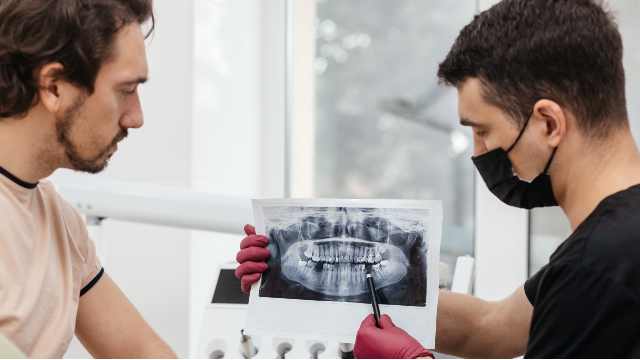
A thorough revision consultation would typically include a clinical exam, imaging to assess the bone around the fixture, a review of your dental and medical history, and a frank discussion of the options — including the option that a particular implant should be removed. Beware of any promise that a failing implant can be quickly and permanently fixed; responsible implant dentistry does not deal in guarantees.
For patients considering treatment in Korea specifically, the logistics also matter. Revision work can be staged over months, which may mean more than one trip or a longer stay. Those details are best worked out directly with the clinic. Dongdaemun Dental Clinic is a registered medical institution for attracting foreign patients under Korea's Ministry of Health and Welfare (as the clinic states) and offers English, Japanese, and Chinese language support, which can make an initial inquiry easier to navigate. You can reach the clinic through its contact page to ask about a personal evaluation.
Frequently Asked Questions
What does "1,548+ implant revision procedures" actually mean?
It is a cumulative count that the clinic reports over roughly three decades of practice, describing the number of implant re-surgery and revision procedures it has recorded. It is a description of experience and case volume, not a success rate, and no success-rate figures are documented. A high number indicates the team has handled many complication cases; it does not guarantee the outcome of any individual case.
Can a failed or infected implant always be saved?
No. Whether an implant can be saved depends on how much bone has been lost, whether infection can be controlled, the implant's position, and your overall health. Some implants can be stabilized or repaired, while others must be removed and the site rebuilt before a new implant is even possible. Only an in-person exam with imaging can determine what is realistic for you.
What is peri-implantitis and why does it matter for revision?
Peri-implantitis is inflammation of the tissue around an implant accompanied by progressive loss of the supporting bone. It is one of the most common reasons implants get into trouble, so it features heavily in revision work. It can often be managed, but it is not always fully curable, and advanced cases may lead to implant failure.
Is implant revision more difficult than placing a new implant?
Generally, yes. A new placement starts from a prepared, relatively healthy site, while revision starts from a compromised one — lost bone, existing hardware, scar tissue, or infection. That is why placement volume and revision volume are reported separately and why revision cases often take longer and require staged treatment.
How long does implant revision take?
It varies widely. A minor prosthetic repair might be quick, while removing a failed fixture, grafting bone, allowing months of healing, and then placing a new implant can span many months. Your personal timeline can only be estimated after an examination and would be discussed as part of your treatment plan.
Should I travel abroad for implant revision?
That is a personal decision that depends on your case, your ability to return for follow-up, and your comfort with staged treatment far from home. Revision often cannot be completed in a single short visit. If you are considering Dongdaemun Dental Clinic, discuss the likely number of visits and the follow-up plan directly with the clinic before committing.
The Bottom Line
- The clinic reports more than 1,548 cumulative implant re-surgery and revision procedures — a description of experience with complication cases, not a success rate; no success rates are documented.
- Revision work is fundamentally different from first-time placement because it starts from a compromised site rather than a healthy one, which is why the clinic reports the two counts separately.
- Peri-implantitis and other complications are real and can lead to implant failure; problems can often be managed but are not always fully curable.
- Whether any implant can be saved, repaired, or must be replaced can only be determined by an in-person exam with imaging, and outcomes vary from person to person.
- Implants are not guaranteed to last forever; the clinic frames long-term function as a goal, and longevity depends on the patient, oral hygiene, bone health, and ongoing maintenance.
This article is for general educational purposes only. It is not a self-diagnosis tool and is not a substitute for a professional evaluation, diagnosis, or treatment plan. Implant revision outcomes vary between individuals, and no result is guaranteed. If you have a dental implant that is painful, loose, or otherwise concerning, seek care from a qualified dental professional and have your candidacy for any procedure assessed by an in-person examination.
More Articles
Continue reading our clinical guides and recovery resources.
Why Bone Graft Implants Matter for Long-Term Dental Health
Learn why Bone Graft Implants support long-term dental health by strengthening the jaw, improving implant stability, and preserving your smile. Learn more.
Learn More

Recovery After Full-Mouth Reconstruction with Implants
Learn what to expect during recovery after Full-Mouth Reconstruction with Implants, including healing, aftercare, diet, and key milestones. Prepare with confidence.
Learn More

How Digital Prosthetic Treatment Works
Learn how Digital Prosthetic Treatment works, from digital scans and planning to custom restorations, improved precision, and comfort. Explore the process today.
Learn More