Trusted Dental Care in Seoul Since 1997 · SNU Dental Alumni · Multilingual Concierge

Dental Guide
Meet Dr. Kim Jeong-chan: SNU-Trained Implant Dentist
Who is Dr. Kim Jeong-chan? Meet the SNU-trained implant dentist at Dongdaemun Dental Clinic in Seoul, with a periodontics background and long experience.
Schedule a ConsultationMeet Dr. Kim Jeong-chan: SNU-Trained Implant Dentist
Medically reviewed by Dr. Huh Byeong-soo, Dentist, Dongdaemun Dental Clinic
If you are researching dental implant care in Seoul from the United States, one of the first questions you probably have is a simple one: who, exactly, will be treating me? Choosing a dentist across an ocean is different from choosing one down the street. You cannot easily walk in, meet the team, or ask a neighbor for a referral. So the credentials, background, and documented focus of the person holding the instruments matter a great deal.
This article introduces Dr. Kim Jeong-chan, the head dentist and representative director of Dongdaemun Dental Clinic in Seoul. It explains what his education and training actually are, what they are not, and how an international patient can think about that information without over-reading it. The goal is an honest, plain-language profile, not a sales pitch.
Who Is Dr. Kim Jeong-chan?
Dr. Kim Jeong-chan is a licensed dentist in South Korea and the head dentist and representative director of Dongdaemun Dental Clinic. His clinical work centers on dental implants, including the placement of implants and the repair or revision of implants that have run into trouble. He is also the author of a book on implant complications, which we cover in a companion article on this site.
In day-to-day terms, that means Dr. Kim is an implant dentist whose training and professional interest sit at the intersection of two areas: implant dentistry and periodontics, the field concerned with the gums and the bone that support teeth and implants. That combination is worth understanding, because the health of the surrounding tissue is central to whether an implant integrates and lasts.
Before we go further, it is worth being precise about titles, because precision protects you as a patient.
An SNU Education and Periodontics Training Background
Dr. Kim's documented education and academic history include the following, all within the Korean system:
- He is a licensed dentist in South Korea.
- He graduated from Seoul National University (SNU) College of Dentistry.
- He trained in periodontics at the SNU Graduate School.
- He served as a Clinical Assistant Professor of Periodontics at Seoul National University Dental Hospital.
Seoul National University is one of Korea's most established universities, and its College of Dentistry and dental hospital are long-standing teaching and clinical institutions within the country. Training in periodontics at that graduate level, and later teaching in that department, means Dr. Kim spent years focused on the gums and bone that hold teeth and implants in place. For a field where implant outcomes depend heavily on healthy supporting tissue, that emphasis is directly relevant.
A Note on Titles: "Implant Dentist," Not "Board-Certified Periodontist"
Here is where careful language matters. What is documented is that Dr. Kim graduated from SNU College of Dentistry, trained in periodontics at the SNU Graduate School, and held a clinical assistant professor role in periodontics at SNU Dental Hospital. That is a genuine periodontics training and teaching background.
What is not being claimed is a specific certified-specialist status. This profile does not describe Dr. Kim as a "board-certified periodontist," and it makes no reference to any United States or American Dental Association specialty board. Dental licensing and specialty recognition work differently from country to country, and mixing them together would be misleading. The accurate way to describe Dr. Kim is as an implant dentist and licensed dentist whose background and training are in periodontics. That framing is both factual and useful, and it is the framing an informed patient should rely on.
If a clinic anywhere ever advertises a foreign dentist using United States board language that does not fit the country where they trained, treat that as a reason to ask more questions, not fewer.
What "Implant Dentist" Means in Practice
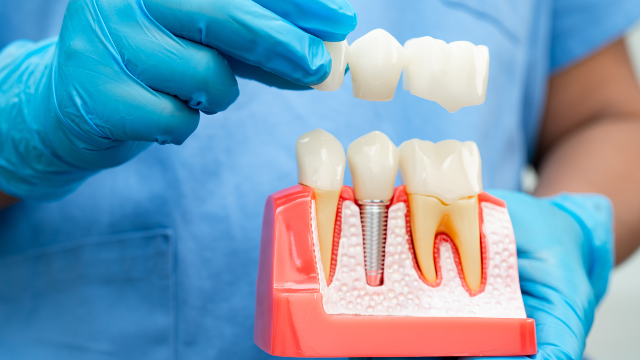
An implant dentist plans and carries out the process of replacing missing teeth with dental implants. A dental implant is not a single object; it is a small system. As the U.S. Food and Drug Administration and clinical references describe, a modern implant typically involves a titanium (or in some cases ceramic) fixture placed in the jawbone, an abutment that connects to it, and a crown, bridge, or denture that sits on top and does the visible work of a tooth.
The step that makes implants possible is osseointegration, the process by which bone grows into direct contact with the implant surface and holds it firmly. That process is biological, it takes time, and it depends on factors like bone quality, oral hygiene, general health, and how well the surrounding gum tissue stays healthy. This is exactly why a periodontics background is relevant to implant work: the tissues a periodontist studies are the tissues an implant lives inside.
An implant dentist's job spans more than surgery. It includes assessing whether someone is a suitable candidate, planning the position of each implant, considering the bone and gum condition, coordinating the fabrication of the final restoration, and guiding long-term maintenance. At Dongdaemun Dental Clinic, restorations can be produced through the clinic's in-house dental laboratory, which the clinic states it has operated since 2003, and digital tools such as an intraoral scanner and CAD/CAM workflow support the design and fabrication of crowns and other prosthetics.
Decades of Implant Experience (What the Clinic Reports)
Experience is one of the most common things patients ask about, and it is also one of the easiest to overstate, so it deserves careful attribution.
The clinic reports that Dr. Kim has roughly 30 years of experience in implant dentistry. The clinic also reports cumulative figures for the practice as a whole: more than 21,588 dental implant procedures and more than 1,548 implant re-surgery or revision procedures over its history. These are cumulative counts that the clinic states, presented here as the clinic's own reporting rather than as any guarantee of your individual result.
It is worth pausing on what those numbers do and does not tell you. A high cumulative volume can reflect a long, busy practice and sustained focus on implants. What no volume figure can promise is how a specific case will turn out. Every mouth is different, and outcomes depend on individual anatomy, health, and maintenance. The honest reading is that Dr. Kim's background reflects a long-standing concentration on implants and implant repair — and that concentration is a reasonable thing to look for — but it is not a predictor of success in any single case.
The clinic also states that a large share of its new patients — more than three-quarters, by its own account — arrive through referrals from existing patients. Referral patterns can reflect patient satisfaction, but they are the clinic's own description and, again, are not a clinical guarantee.
Why a Periodontics Background Matters for Implants
It is easy to think of an implant as a purely mechanical thing: drill, place, done. In reality, the long-term story of an implant is largely a story about the gums and bone around it.
The most common serious problem an implant can develop is a condition called peri-implantitis, an inflammatory process affecting the tissue around an implant that, if it progresses, can lead to loss of the supporting bone. It is closely related in concept to gum disease around natural teeth. Because a periodontics background is precisely the study of those supporting tissues and their diseases, a dentist trained in that area is oriented toward the factors that keep an implant healthy over time — plaque control, tissue health, and early detection of problems — not just the day of surgery.
This does not mean a periodontics background makes any implant permanent or trouble-free; nothing does. It means the training aligns with the parts of implant care that determine longevity. Dr. Kim's documented focus on implant complications and revision, discussed further in the companion article about his book, fits this pattern.
The Author Behind the Chair
Beyond clinical practice, Dr. Kim is the author of a book titled Peri-Implantitis Not Taught in Textbooks, which has an English edition. Writing a book focused specifically on implant complications is a documented sign of sustained attention to what happens when implants do not go smoothly — the difficult cases, the failures, and the repairs.
For a prospective patient, an author's book is not a credential in the licensing sense, and it does not certify anything about your outcome. But it is a real, verifiable indicator of where a clinician has chosen to spend their intellectual energy. A dentist who studies and writes about failed and failing implants is, at minimum, someone who takes the possibility of complications seriously rather than pretending they do not exist. We explore the content and meaning of that book in a separate article.
What This Means for a US Patient Assessing a Foreign Dentist
If you are evaluating Dr. Kim, or any dentist abroad, from the United States, a few practical principles can help:
- Match the credential to the country. SNU training and Korean licensure are Korean qualifications, and they should be described as such. Do not expect, or accept, United States board language layered onto a foreign résumé.
- Look for documented focus, not slogans. A periodontics training background, decades of implant work, and a published book on implant complications are specific and checkable. Phrases like "the best" or "guaranteed results" are not, and you should be wary of them.
- Separate volume from promise. Cumulative case counts describe a practice's history. They do not forecast your outcome.
- Insist on an individual assessment. Whether implants are appropriate for you can only be determined by an in-person examination that includes imaging and a review of your health history. No article, and no online form, can substitute for that.
You can reach the clinic's international coordination through the contact page to ask questions before committing to travel, and the clinic offers support in English, Japanese, and Chinese.
Where Dr. Kim Practices
Dongdaemun Dental Clinic is located on the 6th floor of the New Building Annex at Dongdaemun General Market, 272 Jongno, Jongno-gu, Seoul. The nearest subway station is Dongdaemun Station on Seoul Metro Lines 1 and 4, using Exit 9. The clinic is a Registered Medical Institution for Attracting Foreign Patients under Korea's Ministry of Health and Welfare, a status that reflects registration to serve international patients.
For travelers, the location is reachable from Incheon International Airport by airport railroad and subway or by taxi. Planning a first consultation, and understanding how many trips implant treatment may require, is best done in advance with the clinic, since implants generally involve a healing period between placement and the final crown.
Understanding Implants: Honest Expectations
It is important to be candid about what implants can and cannot promise, because honesty is part of good care.
The clinic states that its ultimate goal is for implants to last a long time — describing, in its own words, an aim for implants to last a lifetime, while acknowledging that individual longevity may vary. That goal is a legitimate thing to aim for, but it must be read alongside the reality: implants are not guaranteed to last forever. Longevity varies from person to person and depends on oral hygiene, the health of the surrounding bone and gums, general health, and ongoing maintenance. Complications such as peri-implantitis, bone loss, or implant failure can occur, and some cases require revision.
None of this is a reason to avoid implants; they are a well-established way to replace missing teeth. It is simply the accurate context. A trustworthy clinician will frame implants as a maintained, long-term investment rather than a one-and-done fix, and will talk openly about risks. That candor is itself a sign worth looking for.
Frequently Asked Questions
Is Dr. Kim Jeong-chan a periodontist?
Dr. Kim is a licensed dentist in South Korea with a documented periodontics training background: he graduated from Seoul National University College of Dentistry, trained in periodontics at the SNU Graduate School, and served as a Clinical Assistant Professor of Periodontics at SNU Dental Hospital. This profile describes him as an implant dentist with a periodontics background rather than using a specific board-certified specialist title, and it makes no United States board claim.
What does "SNU-trained" mean?
SNU stands for Seoul National University, a long-established Korean university whose College of Dentistry and dental hospital are among the country's recognized teaching and clinical institutions. "SNU-trained" means the dentist completed education and, in Dr. Kim's case, graduate periodontics training within that Korean system. It is a Korean qualification and should be understood in that context, not compared directly to a United States specialty board.
How much implant experience does Dr. Kim have?
The clinic reports that Dr. Kim has roughly 30 years of experience in implant dentistry. It also reports cumulative practice figures of more than 21,588 implant procedures and more than 1,548 implant revision procedures over its history. These are figures the clinic states, and they describe the practice's history rather than guaranteeing any individual result.
Why does a periodontics background matter for implants?
Implants depend on the health of the surrounding gums and bone, both during the healing process called osseointegration and over the long term. The most common serious implant problem, peri-implantitis, is an inflammatory condition of those supporting tissues. A dentist with periodontics training is oriented toward the tissue health and maintenance factors that influence whether an implant stays healthy, though no background can make any implant trouble-free.
Can I trust cumulative case numbers from a clinic?
Cumulative case numbers can indicate a long, focused practice, and it is reasonable to consider them. However, they are self-reported by the clinic and describe its history, not your future. They cannot predict how your specific case will go, since outcomes depend on your individual anatomy, health, and maintenance. Treat them as context, not as a promise.
How do I know if I am a candidate for implants?
Candidacy for dental implants can only be determined by an in-person examination that typically includes imaging, such as X-rays or 3D scans, and a review of your medical and dental history. Factors like bone volume, gum health, and certain medical conditions all matter. You can begin the conversation through the clinic's contact page, but a definitive answer requires an examination.
What if I already have a failed or failing implant?
Dr. Kim's documented work includes the repair and revision of implants that have developed problems, and the clinic reports a substantial number of revision procedures. Revision is generally more complex than a first placement, and outcomes vary by case and cannot be guaranteed. An in-person evaluation is needed to understand what, if anything, can be done for a specific situation.
The Bottom Line
- Dr. Kim Jeong-chan is a licensed South Korean dentist and head of Dongdaemun Dental Clinic, best described as an implant dentist with a periodontics training background — not a "board-certified periodontist," and with no United States board claim.
- His documented background includes graduating from SNU College of Dentistry, training in periodontics at the SNU Graduate School, and serving as a Clinical Assistant Professor of Periodontics at SNU Dental Hospital.
- The clinic reports roughly 30 years of implant experience and high cumulative case counts; these are the clinic's own figures and describe its history, not any individual guarantee.
- Implants are a well-established option but are not guaranteed to last forever; longevity varies and depends on maintenance, and complications like peri-implantitis can occur.
- Only an in-person examination can determine whether implants are right for you; use the clinic's contact page to start the conversation.
Medical Disclaimer
This article is for general educational purposes only and is not a self-diagnosis tool. It does not constitute medical or dental advice, diagnosis, or treatment, and it should not replace an in-person consultation with a qualified dentist. Descriptions of Dr. Kim Jeong-chan's background reflect documented education and licensure within the South Korean system. Case volumes, referral figures, and longevity goals attributed to the clinic are the clinic's own statements and are not guarantees of outcome. Individual results vary, and candidacy for any procedure must be confirmed by a qualified clinician after a personal examination.
More Articles
Continue reading our clinical guides and recovery resources.
Why Bone Graft Implants Matter for Long-Term Dental Health
Learn why Bone Graft Implants support long-term dental health by strengthening the jaw, improving implant stability, and preserving your smile. Learn more.
Learn More

Recovery After Full-Mouth Reconstruction with Implants
Learn what to expect during recovery after Full-Mouth Reconstruction with Implants, including healing, aftercare, diet, and key milestones. Prepare with confidence.
Learn More

How Digital Prosthetic Treatment Works
Learn how Digital Prosthetic Treatment works, from digital scans and planning to custom restorations, improved precision, and comfort. Explore the process today.
Learn More