Trusted Dental Care in Seoul Since 1997 · SNU Dental Alumni · Multilingual Concierge

Dental Guide
Seattle to Seoul: Direct Flights for Dental Implants
Flying Seattle to Seoul for dental implants? Learn SEA to Incheon nonstop routes, flight time, the time difference, and how to plan your visit timeline.
Schedule a ConsultationSeattle to Seoul: Direct Flights for Dental Implants
Medically reviewed by Dr. Kim Jeong-chan, Dentist, Representative Director, Dongdaemun Dental Clinic
For patients in the Pacific Northwest considering dental implant treatment in Korea, geography works in your favor. Seattle is one of the closest major US mainland cities to Seoul in flying time, and Seattle-Tacoma International Airport offers nonstop service across the Pacific to Incheon, the gateway airport for the Seoul metropolitan area. That relatively short trans-Pacific hop, combined with well-organized airport-to-city transit, makes a Seattle-to-Seoul dental trip more manageable than many first-time travelers expect.
This guide focuses on the logistics of that journey: which airlines fly the route, roughly how long the flight takes, how the large time difference between the Pacific Northwest and Seoul affects your planning, and how to structure a trip around the realistic timeline of implant treatment. It deliberately does not cover pricing, and it does not compare costs, because those depend entirely on your individual case and should be discussed directly with the clinic. Instead, think of this as a practical framework for building a comfortable, sensible itinerary from the moment you leave Sea-Tac to the day you head home.
Where You Land: Incheon International Airport
Nearly all long-haul flights from the US mainland arrive at Incheon International Airport, abbreviated ICN. Incheon sits west of Seoul and serves as the country's primary international hub. It is a large, modern airport, consistently ranked among the world's best for passenger experience, which in practical terms means immigration, baggage claim, and onward transit are clearly signed in English and generally straightforward to navigate after a long flight.
A second, smaller airport, Gimpo International Airport (GMP), sits closer to central Seoul but mostly handles domestic routes and short international flights from nearby Asian cities. For travelers flying directly from Seattle, Incheon is the arrival point, so plan your onward transit from ICN. Give yourself a little patience on arrival: even at an efficient airport, clearing entry procedures after an eleven- or twelve-hour flight takes time, and you will want to move at an unhurried pace.
Nonstop Flights: Seattle to Incheon
Seattle-Tacoma International Airport (SEA) is well served on the trans-Pacific route to Incheon. Nonstop service is typically operated by several carriers, which have included Delta Air Lines, Korean Air, Alaska Airlines, and Asiana Airlines. Between them, the Seattle-to-Incheon corridor generally sees on the order of three to four daily departures, though the exact number varies by season and by airline scheduling, so this should be treated as a general picture rather than a fixed timetable.
The nonstop flight from Seattle to Incheon usually runs in the range of about 11.5 to 12.5 hours westbound. That makes it one of the shorter trans-Pacific crossings from the US mainland, a genuine advantage for anyone in Washington, Oregon, Idaho, or the broader Pacific Northwest region. Return flights eastbound can differ in duration from the outbound leg because of prevailing high-altitude winds, so do not assume your trip home will feel identical in length to the flight over.
Because airlines add, drop, and re-time routes regularly, do not treat any specific carrier, frequency, or schedule as guaranteed. Use the airlines above as a starting point and confirm current nonstop availability and timings directly with the airline or a travel professional when you book. If you are traveling from elsewhere in the Pacific Northwest, Seattle is often the most convenient gateway, either as your home airport or as a single domestic connection before the Pacific crossing.
The Time Difference: Seattle and Seoul
Korea observes a single time zone, Korea Standard Time, which is UTC+9 and does not change for daylight saving. Seattle sits in the Pacific time zone, which shifts between Pacific Standard Time and Pacific Daylight Time across the year. As a result, Seoul is typically about 16 to 17 hours ahead of Seattle, with the exact gap depending on the season and whether the US is observing daylight saving time.
This large offset has two practical consequences. First, it drives jet lag: crossing this many time zones reliably disrupts sleep and daytime alertness for a few days, which is a strong reason to arrive before any significant appointment rather than the same day. Second, it shapes when you can realistically communicate with the clinic. Because of the roughly half-day difference, late afternoon or evening in Seattle often lines up with the following morning in Seoul, and morning in Seattle corresponds to that evening in Korea. When you want to reach the clinic during its documented hours, it helps to use a reliable time-zone converter and plan your message or call accordingly.
The clinic's documented hours are Monday to Friday from 10:00 to 18:00 with a lunch break from 12:00 to 13:00, and Saturday from 10:00 to 14:00, Korea Standard Time; it is closed on Sundays and public holidays. For asynchronous questions, written channels such as the clinic's online consultation options remove the need to align a live call across the time gap, which is often the easiest approach for Pacific Northwest patients in the planning stage.
Planning Around the Implant Timeline
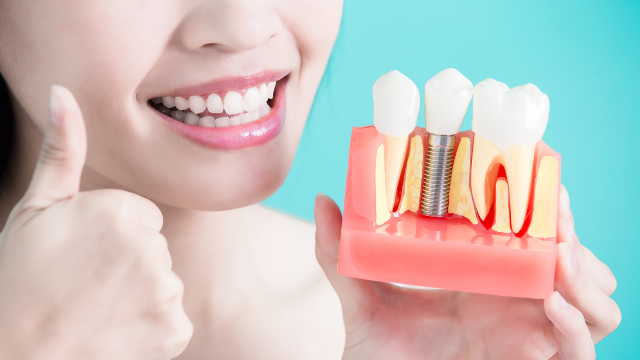
The single most important factor in planning a dental implant trip is understanding that implant treatment is usually not a one-appointment event. After a titanium implant fixture is placed in the jaw, it needs to fuse with the surrounding bone through a biological process called osseointegration. This healing commonly takes on the order of three to six months before the final crown is attached, though the exact interval varies by patient, by bone quality, and by the specifics of the case.
Because of that healing window, implant treatment often spans two separate trips: one for the surgical placement of the fixture, and a later one for the restoration once the implant has integrated. Some patients instead choose one longer stay combined with a return visit, and immediate-load or same-day approaches exist for carefully selected cases only, not as a universal option. Which pathway suits you can be determined only after an in-person evaluation, so the honest planning approach is to expect a two-visit structure and confirm your specific timeline with the clinic.
For a Seattle traveler, this has a clear implication: rather than trying to compress everything into a single visit, plan for the likelihood of two trans-Pacific journeys spaced several months apart, and build each around comfortable rest days. Dongdaemun Dental Clinic provides international patient support in English, Japanese, and Chinese and is a Registered Medical Institution for Attracting Foreign Patients under Korea's Ministry of Health and Welfare, so you can discuss your expected appointment sequence in advance through the clinic website or its contact page. Knowing how your appointments are likely to cluster lets you book flights with sensible margins.
It is worth being candid about what implants can and cannot promise. A well-placed, well-maintained implant can serve a patient for many years, but implants are not guaranteed to last forever. Longevity depends on factors including your oral hygiene, gum and bone health, and ongoing maintenance, and complications such as peri-implantitis or implant failure can occur. Any implant device used in Korea, as in the US, is a regulated medical product; in the US context, implant fixtures are cleared through the FDA's 510(k) pathway, which is a clearance process and is not the same as FDA "approval." Discuss the specifics, including materials and expected maintenance, with your treating dentist.
From Incheon Airport to Dongdaemun Dental Clinic
Getting from Incheon into the city is one of the smoother parts of the trip. A common and reliable route uses the Airport Railroad Express, known as AREX, from Incheon Airport to Seoul Station, followed by a transfer to the Seoul Metro. From Seoul Station you can take Line 1 to Dongdaemun Station, near which the clinic is located. The clinic sits close to Dongdaemun Station, which is served by Seoul Metro Lines 1 and 4, at Exit 9.
Alternatives include the airport limousine buses, which run from Incheon to many points in Seoul, and taxis, which are the most direct but the longest single ride from the airport. Public transit signage and announcements are available in English, and transit cards are easy to obtain at the airport. Because fares, exact travel times, and bus route numbers change, confirm the current details when you arrive rather than relying on figures set in advance. If you are arriving jet-lagged after a long flight, the AREX-plus-Metro combination is generally straightforward, but there is no shame in taking a taxi for your very first arrival if you would rather keep things simple.
Entry Requirements: K-ETA and the Exemption
For entry, US passport holders should be aware of the Korea Electronic Travel Authorization, or K-ETA. Under a temporary exemption, US nationals do not need a K-ETA for eligible short visits through December 31, 2026; the K-ETA requirement is set to resume on January 1, 2027. Travelers who are exempt may also opt in to the electronic arrival card, or e-Arrival Card, to skip the paper form on entry.
Short dental visits generally fall under visa-free short-stay entry for eligible US travelers, but longer stays or certain medical-treatment circumstances may call for a different visa category, such as a medical visa. Entry rules can change, so verify the current requirements with an official Korean government source or a Korean diplomatic mission before you travel. This article is general information, not legal or immigration advice, and your own situation should be confirmed against official sources close to your travel date.
Flying Home After Oral Surgery
Flying to Korea before treatment is largely a comfort question. Flying home afterward deserves more thought, and the honest answer is that it depends on what was done. After surgical steps such as implant placement or an extraction, it is normal to have some swelling, discomfort, and minor bleeding in the following days, and many patients are advised not to fly immediately after such procedures.
There is also a general travel-health point: prolonged immobility on long-haul flights is associated with a small increased risk of blood clots in the legs, known as deep vein thrombosis, particularly for people with certain risk factors, which can include recent surgery. Sensible measures on any long flight include moving around the cabin when you can, doing calf exercises in your seat, and staying hydrated. The right amount of recovery time before your return flight is individual, so ask the dentist who treated you how long to wait, and keep your return itinerary flexible enough to follow that guidance rather than a date you fixed before treatment.
A Note on Insurance and Costs
This guide intentionally avoids price figures and cost comparisons, because those depend on your individual treatment plan and should come directly from the clinic as a personalized quote. On insurance, US dental plans vary widely, and elective or cosmetic dental work is often not covered; care received overseas is also frequently out-of-network. Before assuming any reimbursement, check the specific terms of your own plan, and ask the clinic what documentation it can provide to support any claim you might pursue at home.
Frequently Asked Questions
How long is the nonstop flight from Seattle to Seoul?
The nonstop flight from Seattle-Tacoma to Incheon typically runs about 11.5 to 12.5 hours westbound, making it one of the shorter trans-Pacific crossings from the US mainland. Eastbound return flights can differ in length because of high-altitude winds. Always confirm the exact duration for your specific flight with the airline.
Which airlines fly nonstop from Seattle to Incheon?
Nonstop service on the Seattle-to-Incheon route has typically been offered by carriers including Delta Air Lines, Korean Air, Alaska Airlines, and Asiana Airlines, with roughly three to four daily departures overall. Schedules and frequency change by season, so confirm current nonstop options directly with the airlines when you book.
What is the time difference between Seattle and Seoul?
Seoul uses Korea Standard Time (UTC+9) year-round, while Seattle observes Pacific time with seasonal daylight saving changes. As a result, Seoul is generally about 16 to 17 hours ahead of Seattle. Use a reliable time-zone converter when scheduling calls, and remember the clinic's documented hours are Monday to Saturday, Korea Standard Time.
Will my dental implant treatment need more than one trip?
Often, yes. After the implant fixture is placed, it needs to fuse with the bone through osseointegration, which commonly takes around three to six months before the final crown is fitted, so treatment frequently spans two trips. Some cases follow a different path, but only an in-person evaluation and discussion with the clinic can confirm your timeline.
Do I need a K-ETA to enter Korea from the US?
Under a temporary exemption, US passport holders do not need a K-ETA for eligible short visits through December 31, 2026, with the requirement set to resume on January 1, 2027. Longer or medical stays may require a different visa category. Always verify current entry rules with an official Korean government source before you travel.
How do I get from Incheon Airport to the clinic?
A common route is the AREX Airport Railroad from Incheon to Seoul Station, then Seoul Metro Line 1 to Dongdaemun Station; the clinic is near Dongdaemun Station on Lines 1 and 4, at Exit 9. Airport limousine buses and taxis are alternatives. Confirm current fares and times on arrival, as they change.
When can I fly home after implant surgery?
That depends on the procedure and your healing, and only the dentist who treated you can advise you properly. Many patients are advised not to fly immediately after surgical dental work because of swelling, discomfort, and clot-related considerations on long flights. Keep your return flight flexible so you can follow your dentist's guidance.
The Bottom Line
- Seattle-Tacoma offers nonstop service to Incheon on carriers that have included Delta, Korean Air, Alaska, and Asiana, roughly three to four times daily, at about 11.5 to 12.5 hours westbound, one of the shorter trans-Pacific crossings from the US mainland.
- Seoul is about 16 to 17 hours ahead of Seattle, so plan for jet lag by arriving before any significant appointment and use a time-zone converter when contacting the clinic during its Korea Standard Time hours.
- Expect implant treatment to span two trips in many cases, because osseointegration commonly takes about three to six months; confirm your specific timeline with the clinic.
- From Incheon, the AREX railroad to Seoul Station and then Metro Line 1 to Dongdaemun Station (Lines 1 and 4, Exit 9) is a reliable route to the clinic.
- US passport holders are K-ETA exempt for eligible short visits through December 31, 2026; verify current entry rules, and coordinate your plan with Dongdaemun Dental Clinic, which offers English, Japanese, and Chinese support.
Disclaimer
This article is for general educational purposes and is not medical, dental, travel, immigration, or legal advice. It is not a self-diagnosis tool and does not replace an in-person dental examination or the personalized guidance of your treating dentist and physician. Flight routes, schedules, and prices change frequently and must be confirmed directly with airlines or a travel professional; entry requirements must be confirmed with official Korean government sources. Post-procedure travel timing depends on your individual healing and the specific procedure, so follow the advice of the dentist who treated you. No treatment outcome is guaranteed, dental implants are not guaranteed to last forever, and candidacy for any procedure is determined only after an in-person evaluation.
More Articles
Continue reading our clinical guides and recovery resources.
Why Bone Graft Implants Matter for Long-Term Dental Health
Learn why Bone Graft Implants support long-term dental health by strengthening the jaw, improving implant stability, and preserving your smile. Learn more.
Learn More

Recovery After Full-Mouth Reconstruction with Implants
Learn what to expect during recovery after Full-Mouth Reconstruction with Implants, including healing, aftercare, diet, and key milestones. Prepare with confidence.
Learn More

How Digital Prosthetic Treatment Works
Learn how Digital Prosthetic Treatment works, from digital scans and planning to custom restorations, improved precision, and comfort. Explore the process today.
Learn More