Trusted Dental Care in Seoul Since 1997 · SNU Dental Alumni · Multilingual Concierge

Dental Implants · Needs Clinic Confirmation
Bone-Regenerating Implants
Bone-regenerating implants involve a bone transplant procedure that adds bone material to areas with insufficient bone, helping create a suitable foundation for dental implant placement.
Schedule a ConsultationBone-Regenerating Implants
Medically reviewed by Dr. Kim Jeong-chan, Representative Director and Head Dentist, Dongdaemun Dental Clinic, Seoul
Bone-regenerating implants involve a bone transplant procedure that adds bone material to areas with insufficient bone, helping create a suitable foundation for dental implant placement. This service is built specifically around a barrier-membrane technique used where the alveolar bone has been damaged by periodontitis — a more targeted approach than general grafting.
Who This Service Treats
Best candidates are patients with insufficient jawbone volume who require bone support before implant treatment — most often because periodontitis has already damaged the alveolar bone around a missing or extracted tooth, leaving a defect that a standard implant cannot be placed into safely. Patients who are not suitable for surgery, or who have conditions that may affect healing, require clinical evaluation before any bone transplant procedure is planned.
Why Periodontitis Damages Bone Differently
Periodontitis is a progressive bacterial infection of the gum and bone that surrounds a tooth. Left untreated, it does not just loosen the tooth — it actively destroys the alveolar bone that anchors it, often unevenly, leaving craters or defects in the bone rather than a uniform loss of height the way long-term tooth absence tends to produce. That uneven damage pattern is exactly why a barrier-membrane approach can be more precise here than a bulk graft: the membrane protects a specific defect and gives the body room and time to fill it back in on its own, rather than adding a fixed volume of foreign material to a shape that may not need uniform filling.
This distinction matters practically. A patient whose tooth has simply been missing for years usually has a fairly predictable, gradual loss of bone height and width. A patient recovering from periodontitis may have irregular pockets and craters around the remaining bone, which is a different repair problem even if the end goal — enough bone to support an implant — looks the same on paper.
Consultation and Diagnosis
The clinic evaluates the patient's oral condition and bone status to determine both the need for bone transplantation and the appropriate method. This assessment is specifically about periodontitis-related bone damage — distinguishing it from bone loss caused simply by long-term tooth absence, which the clinic's separate Bone Graft Implants service addresses.
How the Procedure Works
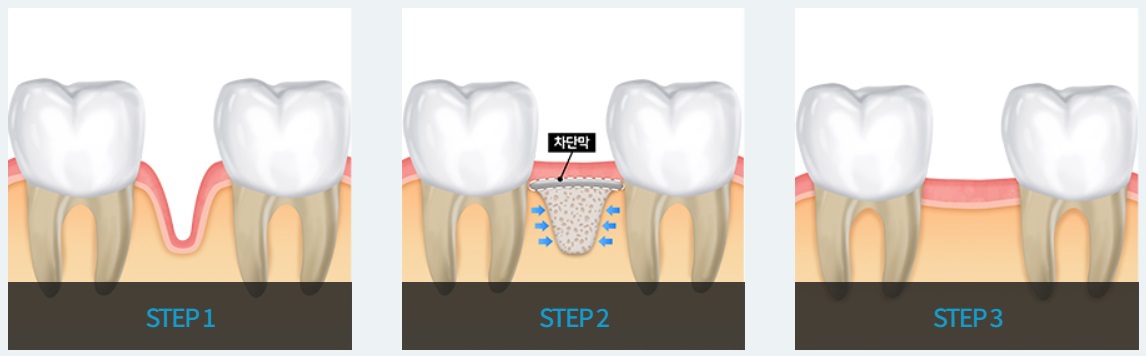
The barrier-membrane technique used here follows a distinct three-step sequence:
Assess the damaged area — areas where the alveolar bone is damaged or missing due to periodontitis are identified.
Regenerate the gum bone — a barrier membrane is used to support alveolar bone regeneration, in this specific technique without additional bone-graft material.
Place the implant — after the alveolar bone has regenerated, the barrier membrane is removed and the implant is placed.
The procedure is performed under appropriate anesthesia for patient comfort. This is a guided-regeneration approach: rather than adding foreign bone material, the barrier membrane creates space and protection that lets the body's own bone regenerate into the damaged area.
Technology and Technique
The clinic uses the CEREC Primescan 3D intraoral scanner (Dentsply Sirona) for impression-free digital scanning, its in-house dental laboratory, and implant components developed in-house by the director. The broader implant-approach principles the clinic applies across its work also apply here once regeneration is complete: strong fixation to prevent micro-movement, integration of the implant and abutment, a temporary-tooth stage to tighten the implant screw firmly, and attention to connection-point problems.
Realistic Outcomes
The procedure helps strengthen the implant site and supports stable dental implant placement once the alveolar bone has regenerated around the previously damaged area. As with any regenerative procedure, results depend on the extent of the original periodontal damage and the patient's individual healing response.
What the Barrier Membrane Actually Does
Guided bone regeneration — the general technique this service is built on — works on a simple principle: bone regenerates more slowly than the soft gum tissue around it, so if nothing separates the two during healing, the faster-growing gum tissue can fill the defect space before bone has a chance to. The barrier membrane physically excludes that soft tissue from the defect for the healing period, giving the slower bone-forming cells the time and protected space they need to rebuild the area. Once enough bone has filled in, the membrane has done its job and is removed as part of the implant-placement stage.
Risks and What to Expect
Possible concerns include healing delays, infection, or complications related to the bone transplantation and regeneration process. Recovery depends on the amount of bone regeneration required before implant placement — there is no single fixed timeline, since the extent of the original periodontitis damage varies considerably between patients.
Pre-Procedure Preparation
Patients undergo consultation and examination before the bone-regeneration procedure, including a review of periodontal history and current gum status. Because this technique is specifically indicated for periodontitis-related bone damage, confirming that the underlying gum disease is stable or resolved is a meaningful part of preparation, not just a formality — regenerating bone into tissue with ongoing active infection undermines the entire premise of the procedure.
Aftercare
Follow-up care and oral management are required to support healing and treatment success. Because periodontitis caused the original bone damage, ongoing gum health maintenance after this procedure matters as much as monitoring the graft site itself — regenerated bone can be lost again if the underlying periodontal disease is not controlled.
How This Differs From Bone Graft Implants
Both services address insufficient bone before implant placement, but they are not interchangeable:
Bone Graft Implants | Bone-Regenerating Implants | |
|---|---|---|
Typical cause addressed | Long-term tooth loss, general bone deficiency | Bone damage specifically from periodontitis |
Technique | Graft material placed directly (autogenous, allograft, xenograft, or synthetic bone) | Barrier membrane guides the body's own bone regeneration |
Material added | Yes, a graft material | Not necessarily — regeneration can occur without added graft material |
Your evaluation determines which approach — or a combination of both — fits your specific bone condition, and it is entirely possible for a single patient to need elements of each depending on how the bone deficiency is distributed around the jaw.
Why Dongdaemun Dental Clinic
Implant components developed and manufactured in-house by the clinic's director.
An in-house dental laboratory operating since 2003.
CEREC Primescan 3D digital scanning for precise pre- and post-regeneration assessment.
Dentists trained at Seoul National University.
Roughly 30 years of practice in the Dongdaemun area, with the majority of new patients arriving by referral.
Planning Your Visit as a US or International Patient
Because bone regeneration requires a healing period before implant placement, this is a staged treatment rather than a single-visit procedure — international patients should plan around that reality rather than assuming a single trip will complete the process. US patients typically fly into Incheon (ICN) or Gimpo (GMP), with the clinic reachable via AREX train plus subway to Dongdaemun Station (Lines 1 and 4), Exit 9; K-ETA generally allows visa-free entry for short stays for US passport holders, though current rules should be confirmed before booking. English, Japanese, and Chinese translation service is available, and phone contact is available during clinic hours (KST) for follow-up questions after you return home.
Combining With Other Treatment
Because periodontitis rarely affects a single isolated site in isolation, bone regeneration is often planned alongside periodontal treatment, scaling, or gum contouring to address the disease process itself, not just its bone-loss consequence. Treating the active infection and regenerating the lost bone are typically parts of the same overall care plan rather than sequential, unrelated procedures.
The Bottom Line
Bone-regenerating implants use a barrier-membrane technique to regrow alveolar bone damaged by periodontitis.
The three-step process assesses damage, regenerates bone via membrane, then places the implant once healed.
This differs from general bone grafting, which adds material rather than guiding the body's own regeneration.
Ongoing periodontal health management after treatment matters for keeping the regenerated bone stable.
Timing is staged around healing; the clinic confirms a schedule after assessing the extent of damage.
Frequently Asked Questions
Is this the same as a bone graft? No. This service uses a barrier membrane to guide the body's own bone regeneration in areas damaged by periodontitis, rather than placing an added graft material as the clinic's Bone Graft Implants service does.
Why did I lose bone in the first place? Periodontitis is a bacterial infection that damages the bone supporting the teeth over time. Once that infection is controlled, this service addresses the bone deficit it left behind so an implant can eventually be placed.
Will I need to treat my gum disease first? Generally, yes — active periodontal infection needs to be under control before bone regeneration is attempted, since operating in actively infected tissue works against the goal of the procedure.
How long does the whole process take? Recovery and regeneration time depend on the extent of bone damage and vary by patient; the clinic tracks healing through follow-up visits rather than committing to a fixed schedule in advance.
What happens if the regenerated bone isn't stable enough for an implant? Follow-up examinations are used specifically to confirm the bone has regenerated sufficiently before implant placement proceeds — if it hasn't, the timeline is extended rather than placing an implant into inadequate bone.
Does the membrane stay in permanently? No. The membrane's job is to protect the healing space during regeneration; it is removed at the same time the implant is placed, once the alveolar bone has filled back in around the defect.
Can I get a temporary tooth while I wait for the bone to regenerate? This depends on the location and extent of the defect being treated, and is worked out individually at the consultation stage rather than offered as a standard option for every case.
Is this procedure painful? The procedure is performed under appropriate anesthesia for patient comfort. As with any surgical procedure involving the gum and bone, some post-procedure discomfort is expected during the initial healing period, managed according to the patient's needs.
How do I know if my bone loss is from periodontitis or just missing teeth? The clinic's diagnostic evaluation — reviewing your dental history alongside digital scanning and imaging — distinguishes between these causes, since they call for different treatment approaches even though both eventually require enough bone for a stable implant.
Book a Consultation at Dongdaemun Dental Clinic
To find out whether bone regeneration is the right path for your case, contact Dongdaemun Dental Clinic in Seoul. The clinic is open Monday to Friday 10:00 AM–6:00 PM KST with a lunch break from 12:00 PM to 1:00 PM, and Saturday 10:00 AM–2:00 PM KST, closed Sundays and public holidays. Enquire through the contact page or by telephone on +82-2-2268-9529.
Disclaimer
This page is for general informational purposes and does not constitute individualized medical advice. Candidacy, technique, and expected outcomes can only be determined through a consultation with a qualified dentist.
Sources & Further Reading
Other Services
Explore additional dental treatments offered by our specialists.
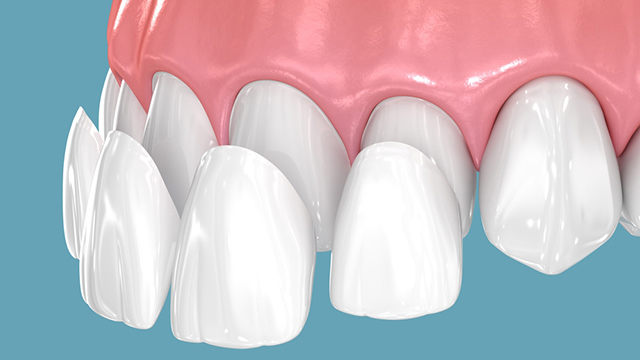
Laminate (Veneers)
Laminate veneers are thin, custom shells — usually ceramic — bonded to the front surface of teeth to improve their color, shape, size, or minor alignment, mainly in the visible smile zone.
Learn More
Bone-Regenerating Implants
Bone-regenerating implants involve a bone transplant procedure that adds bone material to areas with insufficient bone, helping create a suitable foundation for dental implant placement.
Learn More
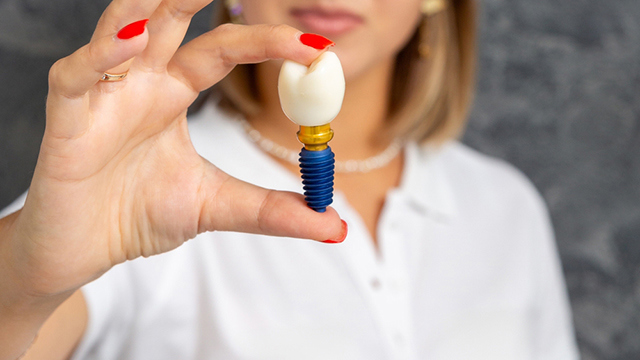
Bone Graft Implants
Bone graft implant treatment addresses one of the most common obstacles to getting a dental implant: not having enough bone to hold one securely.
Learn More