Trusted Dental Care in Seoul Since 1997 · SNU Dental Alumni · Multilingual Concierge


General Dentistry · Needs Clinic Confirmation
Cavity (Tooth Decay) Treatment
Cavity treatment addresses teeth damaged by dental caries, with the specific treatment approach depending on how far the decay has progressed — from a direct restoration for early-stage decay through to root canal treatm
Schedule a ConsultationCavity (Tooth Decay) Treatment

Medically reviewed by Dr. Huh Byeong-soo, Director, Dongdaemun Dental Clinic, Seoul
Cavity treatment addresses teeth damaged by dental caries, with the specific treatment approach depending on how far the decay has progressed — from a direct restoration for early-stage decay through to root canal treatment or, in the most advanced cases, extraction and implant planning. At Dongdaemun Dental Clinic, the appropriate treatment method is determined through examination rather than assumed in advance.
Why Patients Seek This Treatment
Patients seek cavity treatment to restore chewing ability, improve accurate pronunciation, prevent the spread of tooth decay, and relieve problems caused by dental caries before they become more severe. Early treatment matters specifically because pain from an untreated cavity can begin and progressively worsen the longer treatment is delayed.
Who Is a Good Candidate
Patients diagnosed with tooth decay requiring treatment are candidates for this service, though the specific treatment received depends on the stage of decay identified at consultation and examination — a direct restoration, an inlay, a crown, or root canal treatment may each be appropriate depending on how advanced the decay is.
Consultation and Diagnosis
Treatment begins with registration, a pre-treatment questionnaire, and a one-on-one consultation to evaluate the patient's dental health. A detailed examination follows, using precision diagnostic equipment and clinical examination to identify the problem and establish an appropriate treatment plan. The clinic evaluates both dental health and overall health before determining whether treatment is necessary and selecting the appropriate method.
How Treatment Proceeds
Registration and consultation, including a pre-treatment questionnaire.
Detailed examination using precision diagnostic equipment and clinical evaluation.
Local anesthesia is administered.
The decayed portion is removed.
Appropriate treatment is performed based on the severity of the decay — direct restoration, an inlay, a crown, or root canal treatment.
Periodic follow-up visits are scheduled for continued care.
Understanding the Stages of Decay and Matching Treatment
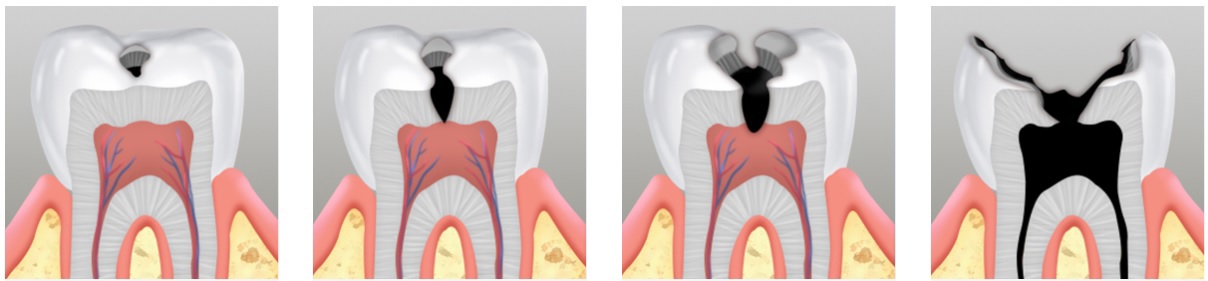
The clinic offers different treatment methods according to the severity of the cavity rather than a single universal approach. Direct restoration is generally used for early-stage decay. An inlay is used for more moderate decay affecting a larger portion of the tooth. A crown is used when decay has caused extensive tooth damage or fracture. Root canal treatment becomes necessary when decay has progressed to affect the nerve and blood supply inside the tooth. In the most advanced cases — where decay has progressed to the root — extraction followed by implant treatment planning may be the appropriate path forward. Because these categories genuinely require different procedures, an accurate diagnosis at the examination stage is what determines the actual treatment plan, not the patient's own sense of how serious the cavity looks.
Is It Painful
Local anesthesia is used before the decayed portion is removed, keeping the procedure itself generally comfortable. Specific detail on anesthesia type and pain-management approach for more involved cases such as root canal treatment should be confirmed directly at consultation.
Benefits
Cavity treatment can improve chewing ability, improve accurate pronunciation, and help prevent the spread of tooth decay to adjacent teeth or deeper into the affected tooth. The treatment method selected is matched to the extent of tooth damage rather than a one-size-fits-all restoration.
Why Delaying Treatment Is a Real Risk, Not Just a Recommendation
Dental caries does not remain static — once decay has begun, it generally continues progressing through the layers of the tooth if untreated, moving from a stage treatable with a straightforward direct restoration toward stages requiring an inlay, a crown, root canal treatment, or ultimately extraction. This progression is also why the same underlying problem, caught early, is typically both less invasive to treat and requires a comparatively simpler visit than the same cavity caught late, when nerve involvement or structural damage has already occurred.
Technology and Diagnostic Approach
The clinic's structured protocol relies on precision diagnostic equipment and clinical examination to accurately identify the extent of decay before treatment planning, rather than visual assessment alone. This diagnostic step is what allows the treatment plan — whether restoration, inlay, crown, or root canal — to be matched to the actual severity of the decay found.
Signs a Cavity May Be Present
Sensitivity to hot, cold, or sweet foods and drinks, a visible dark spot or hole on a tooth surface, pain when biting down, and, in more advanced cases, spontaneous or persistent toothache can all indicate active decay. None of these require waiting for confirmation — patients experiencing any of these signs are generally better served by an earlier examination than a later one, given how directly the stage of decay at diagnosis affects the treatment required.
What Happens at Each Decay Stage in Practice
Early-stage decay affecting only the outer enamel or a limited area of dentin is generally addressed with a direct restoration, completed by removing the decayed material and filling the resulting space in a single visit. Moderate decay involving a larger portion of the tooth structure may call for an inlay — a custom-fabricated restoration bonded into place rather than a simple filled cavity — because a direct restoration would not adequately support the remaining tooth structure at that scale. Extensive damage or fracture typically calls for a full crown, covering and protecting the remaining tooth. Once decay has reached the nerve and blood supply inside the tooth, root canal treatment becomes necessary to remove the infected or inflamed tissue and preserve the tooth itself rather than lose it to extraction. Only when decay has progressed all the way to the root, beyond what root canal treatment can address, does extraction followed by implant planning become the recommended path.
Recovery specifics vary by which treatment method is used for a given case; a direct restoration generally involves minimal recovery, while root canal treatment or a crown placement may involve a different aftercare path. These specifics should be confirmed at consultation based on the treatment actually recommended for your tooth.
Alternative Treatments and How They Compare
Rather than offering alternative therapies to cavity treatment itself, the clinic's approach differentiates by severity: direct restoration for early-stage decay, inlay for moderate decay, crown for extensive tooth damage or fracture, root canal treatment when decay has reached the nerve, and implant treatment after extraction for teeth where decay has progressed to the root. Understanding which category applies to your specific cavity is the purpose of the diagnostic examination, not something to guess at beforehand.
Preventing Future Cavities
While this service treats existing decay, the underlying causes of new cavities forming — sugar and starch in the diet feeding bacteria that produce acid, insufficient brushing and flossing, and reduced saliva flow from certain medications or conditions — generally continue to apply after treatment unless addressed. Patients who have just had a cavity treated are, in that sense, not automatically protected from developing another one in a different tooth, which is part of why the clinic's periodic follow-up visits serve a preventive purpose alongside monitoring the specific tooth just treated.
Follow-Up Care
Periodic follow-up visits are scheduled for continued care after treatment, allowing the clinic to monitor the restored tooth and catch any new or recurring decay early, consistent with the same early-intervention principle that applies to the original cavity treatment.
Why Dongdaemun Dental Clinic

Structured diagnostic-equipment-based consultation and treatment protocol, matching treatment method to decay severity.
Precision diagnostic equipment used to accurately identify the extent of decay before treatment.
Periodic follow-up visits scheduled for ongoing monitoring.
Seoul National University-trained dentists.
English, Japanese, and Chinese translation service for international patients.
Planning Your Visit as a US or International Patient
Visit duration depends heavily on which treatment method the examination determines is appropriate — a straightforward direct restoration is a comparatively quick visit, while a crown or root canal treatment may require more time or a follow-up appointment, so international patients should confirm expected visit requirements once the treatment plan is known. US patients typically fly into Incheon (ICN) or Gimpo (GMP), with the clinic reachable via AREX train plus subway to Dongdaemun Station (Lines 1 and 4), Exit 9; K-ETA generally allows visa-free entry for short stays for US passport holders, subject to confirming current requirements. English, Japanese, and Chinese translation service is available throughout the visit.
A Note on Timing Your Visit
Because early-stage decay is treated with a simpler, faster procedure than advanced decay, scheduling a consultation as soon as a cavity is suspected — rather than waiting until pain develops — genuinely affects both the complexity of treatment needed and how much of a single international trip it is likely to require.
How This Differs From Resin Fillings and Wisdom Tooth Extraction
The clinic offers several related general dentistry services that can sound similar but address different situations. Resin (composite) fillings are one possible treatment path within cavity care, generally reserved for smaller or more straightforward restorations rather than the full range of severity this cavity treatment service covers, which spans from a simple filling through crowns and root canal treatment. Wisdom tooth extraction is a separate service entirely, addressing third molars that have erupted abnormally or become impacted — a different clinical problem from decay in an existing, properly positioned tooth, even though both fall under general dentistry and may occasionally be discussed at the same consultation if a patient has multiple concerns.
Setting Realistic Expectations
Approved claims for this treatment are limited to what the clinic's source actually supports: treating teeth damaged by dental caries using direct restoration, inlays, crowns, or root canal treatment depending on severity, improving chewing ability, improving accurate pronunciation, and helping prevent the spread of tooth decay. Recovery timelines, anesthesia details beyond local anesthesia for decay removal, and exact visit counts for more advanced cases were not independently confirmed and should be discussed directly with the clinic.
The Bottom Line
Treatment method is matched to the stage of decay: direct restoration, inlay, crown, root canal treatment, or extraction with implant planning.
Local anesthesia is used before the decayed portion is removed.
Early treatment generally means a simpler, less invasive procedure than waiting until decay has progressed further.
Diagnostic examination — not the patient's own assessment — determines which treatment category applies.
Periodic follow-up visits support ongoing monitoring after treatment.
Frequently Asked Questions
How do I know if I need a filling, a crown, or a root canal? This depends on how far the decay has progressed, which is determined through the clinic's diagnostic examination — direct restoration generally applies to early decay, moving through inlay, crown, and root canal treatment as severity increases.
Will this be painful? Local anesthesia is used before removing the decayed portion, which is intended to keep the procedure comfortable; specifics for more involved treatments should be confirmed at consultation.
How long will treatment take? This depends entirely on which treatment method your specific cavity requires — a direct restoration is typically the fastest option, while a crown or root canal treatment may take longer or require a follow-up visit.
What happens if I ignore a cavity? Untreated decay generally continues to progress, and pain can begin and worsen over time — the same cavity is usually simpler to treat the earlier it's addressed.
Can this be done in one visit if I'm traveling from the US? A straightforward direct restoration can often be completed efficiently, but more advanced cases may need a follow-up visit — confirm the likely treatment path and visit count once your examination results are known.
What if my tooth is too damaged for a filling? More extensive damage may call for an inlay, a crown, or root canal treatment, and in the most advanced cases, extraction followed by discussion of implant options — the diagnostic examination determines which applies.
Do I need X-rays or other imaging before treatment? The clinic uses precision diagnostic equipment and clinical examination to assess decay before determining a treatment plan; specific imaging requirements can be confirmed at consultation.
Will follow-up visits be needed after treatment? Yes — periodic follow-up visits are scheduled for continued monitoring and care after cavity treatment.
Can cavity treatment be combined with other dental work during my visit? This depends on your specific treatment plan and what else is being addressed; discuss combining treatments with the clinic during your consultation.
Does insurance typically cover cavity treatment? Cost and insurance details were not confirmed as part of this content — ask the clinic directly for a cost estimate.
Book a Consultation at Dongdaemun Dental Clinic
To discuss cavity or tooth decay treatment, contact Dongdaemun Dental Clinic in Seoul. The clinic is open Monday to Friday 10:00 AM–6:00 PM KST with a lunch break from 12:00 PM to 1:00 PM, and Saturday 10:00 AM–2:00 PM KST, closed Sundays and public holidays. Enquire through the contact page or by telephone on +82-2-2268-9529.
Disclaimer
This page is for general informational purposes and does not constitute individualized medical advice. Candidacy, technique, and expected outcomes can only be determined through a consultation with a qualified dentist.
Sources & Further Reading
Other Services
Explore additional dental treatments offered by our specialists.
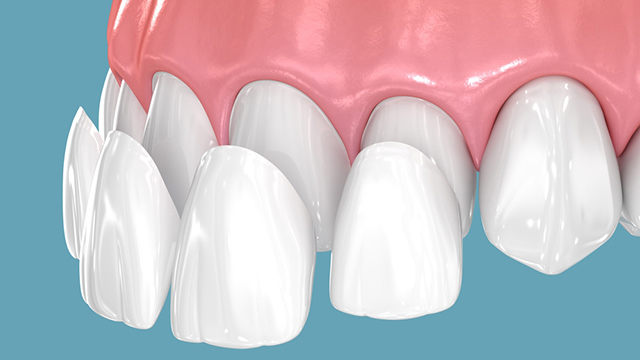
Laminate (Veneers)
Laminate veneers are thin, custom shells — usually ceramic — bonded to the front surface of teeth to improve their color, shape, size, or minor alignment, mainly in the visible smile zone.
Learn More

Bone-Regenerating Implants
Bone-regenerating implants involve a bone transplant procedure that adds bone material to areas with insufficient bone, helping create a suitable foundation for dental implant placement.
Learn More

Bone Graft Implants
Bone graft implant treatment addresses one of the most common obstacles to getting a dental implant: not having enough bone to hold one securely.
Learn More