Trusted Dental Care in Seoul Since 1997 · SNU Dental Alumni · Multilingual Concierge


Specialty Overview
Dental Implants
A dental implant is an artificial tooth root placed into the jaw to hold a prosthetic tooth or bridge, and it may be an option for people who have lost one or more teeth to periodontal disease, injury, or another cause.
Schedule a ConsultationDental Implants in Seoul

Medically reviewed by Dr. Kim Jeong-chan, Representative Director and Head Dentist, Dongdaemun Dental Clinic, Seoul
A dental implant is an artificial tooth root placed into the jaw to hold a prosthetic tooth or bridge, and it may be an option for people who have lost one or more teeth to periodontal disease, injury, or another cause. At Dongdaemun Dental Clinic in Seoul, implant treatment is led by Representative Director Dr. Kim Jeong-chan, a Seoul National University–trained periodontist with 30 years of clinical experience in implant surgery, and it is built around one specific objective: an implant that stays stable for the long term rather than one that simply integrates on the day it is placed.
What Is a Dental Implant?
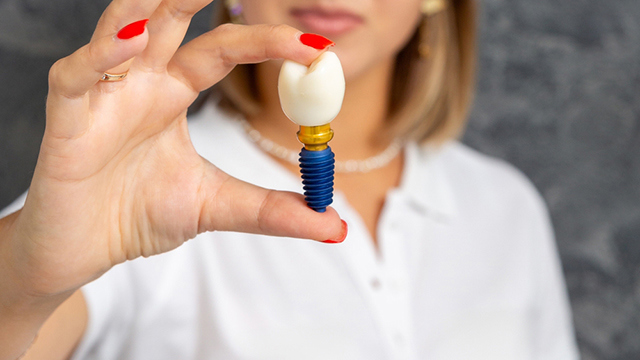
A dental implant replaces the root of a missing tooth. A titanium fixture is placed into the jawbone to serve as an artificial root, and it is then restored with an abutment and a crown that together function as the visible tooth. Most patients who say "implant" are describing that whole assembly rather than the fixture alone.
The American Academy of Periodontology describes two principal implant types. Endosteal implants are placed into the jawbone itself and are the most common form, taking the shape of screws, cylinders, or blades, with each fixture supporting one or more prosthetic teeth. Subperiosteal implants sit on top of the jaw with a metal framework whose posts protrude through the gum, and they are generally reserved for patients who cannot wear conventional dentures and lack the bone height to hold an endosteal implant.
A few mechanical points set realistic expectations before treatment:
The implant is a structural replacement for a tooth root, not a cosmetic overlay on an existing tooth.
It is intimately connected with both the soft tissue of the gums and the underlying bone, which is why gum health is inseparable from implant success.
Once restored, it requires the same daily brushing and flossing as a natural tooth.
It is a long-term restoration whose durability depends on how the components fit together and how well the surrounding tissue is maintained.
Who Performs Implant Treatment at Dongdaemun Dental Clinic
|
Dr. Kim Jeong-chan, Representative Director |
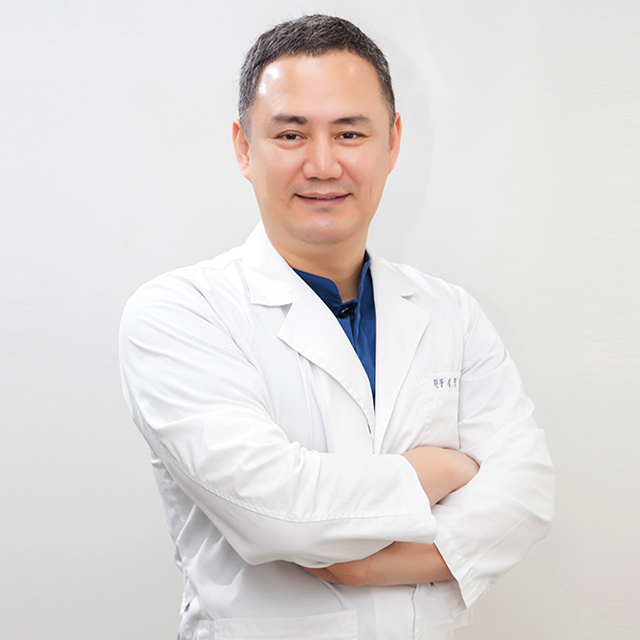
Implant treatment at Dongdaemun Dental Clinic is led by Dr. Kim Jeong-chan, Representative Director and Head Dentist. He graduated from Seoul National University College of Dentistry and completed periodontics training at Seoul National University Graduate School. He has served as a Clinical Assistant Professor of Periodontics at Seoul National University Dental Hospital.
His experience is concentrated specifically in implantology rather than spread across general practice:
30 years of clinical experience in dental implant surgery.
More than 21,588 cumulative dental implant procedures performed.
More than 1,548 cumulative implant re-surgery and revision procedures performed.
Core specializations in implant repair and revision surgery, dental implants, bone-graft and bone-regeneration implants, periodontology, and the management of peri-implantitis and implant complications.
That periodontics background is directly relevant rather than incidental. Because implants depend on the health of the gum and bone that surround them, a clinician trained in periodontology is working in the tissue where implant problems actually begin. The American Academy of Periodontology makes the same point about the specialty as a whole: dental implants are intimately connected with both the soft tissues of the gums and the underlying hard tissue of the bone, and periodontists complete three years of specialized training beyond dental school that makes them experts in both. That combination of experience and knowledge is what the AAP identifies as the basis for an implant solution that looks and feels like a natural tooth. Dr. Kim is the author of Peri-implantitis Not Taught in Textbooks, later released in an English edition, and has hosted the Deep Implant Basic Course Seminar roughly three times a year between 2013 and 2019 and an Implant Repair Seminar in 2019, alongside international lectures in Shanghai, Tokyo, Beijing, Pakistan, Australia, and Myanmar.
In his own words: "Thirty years in one place is only possible with real skill. Almost every dental clinic now places implants, but few can perform implant re-surgery. A failed implant needs a more complex, meticulous process and far greater experience."
Dongdaemun Dental Clinic's dentists are all Seoul National University–trained. Dr. Heo Byung-soo, Director, also practices at the clinic, holding a Master of Science in Dentistry from SNU and having completed the Deep Implant System Basic and Master courses.
The Clinic's Implant Approach
Dongdaemun Dental Clinic's implant method is organized around fixation and the implant–abutment connection, which is where a number of long-term implant problems originate. The clinic describes its approach as:
Strong fixation of the implant within the bone.
An integrated implant and abutment design, reducing the number of separate interfaces that can loosen or fracture.
Firm tightening of the implant screw through a temporary-crown stage, so the connection is progressively stabilized rather than finalized in a single step.
Direct attention to connection-area problems, which the clinic treats as a design question rather than only a maintenance question.
The clinic participates directly in research related to implant manufacturing, surgery, and prosthetics, and uses an implant system it developed itself. Its in-house dental laboratory has operated since 2003, which keeps component fabrication within the practice rather than outsourced.
Technology Used
The clinic uses the CEREC Primescan digital 3D intraoral scanner from Dentsply Sirona. Scanning the mouth digitally reduces reliance on conventional impression materials, improves treatment precision, shortens treatment time, and lowers the discomfort many patients associate with traditional impression trays. Reducing impression error matters particularly for implant prosthetics, where the fit between fixture, abutment, and crown determines how evenly force is distributed once the patient starts chewing.
Who Is a Candidate for Dental Implants?
Candidacy is confirmed through examination at the clinic. As general guidance, the American Academy of Periodontology describes an ideal implant candidate as someone who:
Is in good general and oral health.
Has adequate bone in the jaw to support the implant.
Has healthy gum tissues that are free of periodontal disease.
Dongdaemun Dental Clinic additionally describes its implant approach as suited to patients who need a stable long-term restoration, and specifically to patients seeking implant repair or re-surgery because of problems with an existing implant, such as implant movement, broken screws or connection parts, or screw loosening.
Where the jaw does not currently have enough bone, that does not automatically rule out treatment. The AAP notes that sinus augmentation can raise the sinus floor and develop bone in the upper back jaw, an area that has traditionally been difficult for implant placement, and that ridge modification can fill a deficient ridge with bone or bone substitute to improve the chances of successful implant placement. Bone-graft implants and bone-regenerating implants are among the treatments this clinic lists.
Implant Types and Treatment Plans
Depending on the specific condition and the type of implant chosen, a treatment plan is tailored to the individual. The AAP outlines the following plans by situation:
Situation | Treatment approach |
|---|---|
A single missing tooth | One dental implant replaces it |
Several missing teeth | Multiple dental implants replace them |
All teeth missing | Full-mouth dental implants |
Insufficient bone in the upper back jaw | Sinus augmentation before placement |
Deformity or deficiency of the jaw ridge | Ridge modification before placement |
Results, Longevity, and What the Clinic Claims
Dongdaemun Dental Clinic states that its implant retreatment method is designed to provide a maintenance period of approximately 20 years, and that patients who underwent re-treatment at the clinic have reportedly experienced about 20 years without significant problems after surgery. The clinic's stated ultimate goal is that an implant, once placed, lasts a lifetime.
Two qualifications belong alongside that claim. First, the clinic itself notes that individual longevity varies by patient. Second, this is the clinic's own reported outcome for its own method, not an independently published survival figure, and it should be read as such.
Complications This Approach Is Designed to Address
The clinic identifies a specific set of implant problems as the focus of its method:
Implant fracture.
Broken screws.
Broken connection parts.
Screw loosening.
These are mechanical failures at or around the implant–abutment junction, and they are distinct from biological failure of the surrounding tissue. On the biological side, the AAP notes that implants, like natural teeth, require conscientious at-home care and regular dental visits to preserve function and prevent peri-implant disease — the inflammatory conditions that affect the gum and bone around an implant. Both categories matter: an implant can be mechanically sound and still fail if the surrounding tissue is not maintained, and it can sit in healthy tissue and still fail if the connection loosens.
Implant Repair and Revision
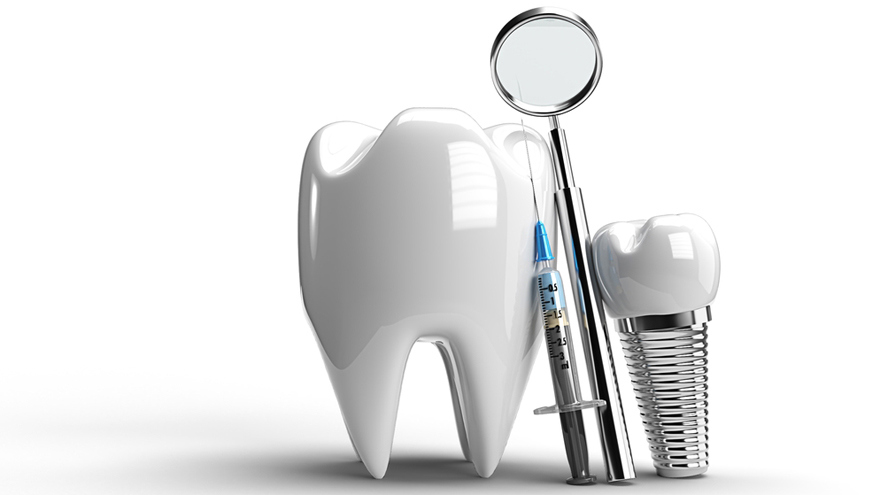
Implant repair is a distinct capability rather than a variation on placement, and it is where this clinic concentrates. Dr. Kim has performed more than 1,548 cumulative implant re-surgery and revision procedures, and his listed subspecialty expertise covers implant re-surgery for complex and failed cases, Deep Implant system placement and revision, management and treatment solutions for peri-implantitis, and advanced bone grafting with occlusal stability adjustment.
Patients who arrive with an existing implant that moves, whose screw has loosened or broken, or whose connection parts have fractured are the specific group this method was developed around. Revision work is more demanding than initial placement because the site has already been operated on, the bone may have changed, and the existing hardware has to be assessed before anything is replaced.
Safety, Precision, and Clinic Standards

Implant treatment is led by a periodontics-trained dentist with 30 years of implant surgery experience.
The clinic has operated its own dental laboratory since 2003, keeping prosthetic fabrication in-house.
Digital 3D intraoral scanning is used to reduce impression error and improve precision.
The clinic reports that over 75% of new patients arrive by referral.
The clinic states it treats every patient "with the heart of treating one's own family," emphasizing systematic treatment planning, correct procedures, and careful aftercare.
Following implant placement, the AAP advises that the periodontist works with the patient and their general dentist to develop a care plan, with periodic follow-up visits scheduled to monitor the implant, teeth, and gums.
The Bottom Line
A dental implant replaces a missing tooth root with a titanium fixture, restored with an abutment and crown.
At Dongdaemun Dental Clinic, treatment is led by Dr. Kim Jeong-chan, an SNU-trained periodontist with 30 years of implant experience and 21,588+ implant procedures.
The clinic's method centers on strong fixation and an integrated implant–abutment design to reduce loosening, fracture, and connection failure.
Implant repair and revision is a specific focus, with 1,548+ revision procedures performed.
The clinic reports an approximately 20-year maintenance period for its retreatment method; individual longevity varies.
Frequently Asked Questions
What exactly is a dental implant? It is an artificial tooth root placed into the jaw to hold a prosthetic tooth or bridge. Most patients use the word to mean the whole assembly of fixture, abutment, and crown. It may be an option after tooth loss from periodontal disease, injury, or another cause.
Am I a candidate? The AAP describes an ideal candidate as someone in good general and oral health, with adequate jawbone to support the implant and healthy gum tissue free of periodontal disease. Candidacy at this clinic is confirmed through examination, and insufficient bone does not automatically exclude treatment because grafting and augmentation options exist.
What makes this clinic's implant approach different? The method is built around strong fixation and an integrated implant–abutment design, with the screw tightened firmly through a temporary-crown stage, specifically to reduce screw loosening and connection-area failure. The clinic uses an implant system it developed itself and has run its own dental laboratory since 2003.
Can a failed or problematic implant be repaired? Yes, and it is a particular focus here. Dr. Kim has performed more than 1,548 implant re-surgery and revision procedures, covering implant movement, broken screws, and fractured connection parts. Revision is more complex than initial placement because the site has already been operated on.
How long do the implants last? The clinic states its retreatment method is designed for a maintenance period of approximately 20 years, and reports that re-treated patients have gone about 20 years without significant problems. The clinic's stated goal is lifetime function. Individual longevity varies, and this is the clinic's own reported outcome rather than an independent published figure.
What technology is used? The CEREC Primescan digital 3D intraoral scanner from Dentsply Sirona. It digitizes the impression process, which improves precision, reduces treatment time, and avoids much of the discomfort of conventional impression materials.
Who will treat me? Dr. Kim Jeong-chan leads implant treatment. He is a Clinical Assistant Professor of Periodontics at SNU Dental Hospital and author of Peri-implantitis Not Taught in Textbooks. Dr. Heo Byung-soo, Director, also practices at the clinic and has completed the Deep Implant System Basic and Master courses.
What care does an implant need afterward? The same conscientious brushing and flossing as a natural tooth, plus regular dental visits. The AAP notes this is what preserves function and helps prevent peri-implant disease, and that periodic follow-up visits are scheduled to monitor the implant, teeth, and gums.
Book a Consultation at Dongdaemun Dental Clinic
To find out whether dental implants are appropriate for your situation, or to have an existing implant problem assessed, contact Dongdaemun Dental Clinic in Seoul. The clinic is open Monday to Friday from 10:00 AM to 6:00 PM KST with a lunch break from 12:00 PM to 1:00 PM, and Saturday from 10:00 AM to 2:00 PM KST, closed Sundays and public holidays. Enquiries can be made through the clinic's contact page or by telephone on +82-2-2268-9529. English, Japanese, and Chinese translation service is offered.
Disclaimer
This page is for general informational purposes and does not constitute individualized medical advice. Candidacy, technique, and expected outcomes can only be determined through a consultation with a qualified dentist.
Sources & Further Reading
Related Services
Dental procedures available within our specialized departments.
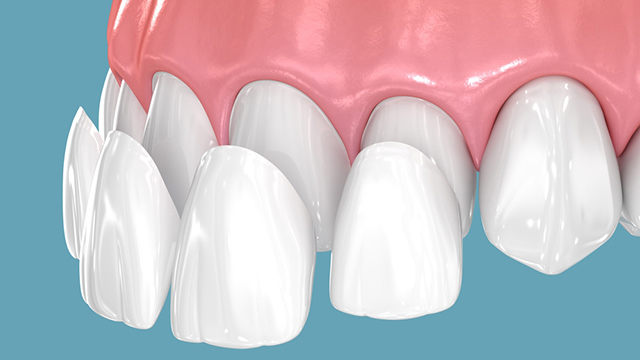
Laminate (Veneers)
Laminate veneers are thin, custom shells — usually ceramic — bonded to the front surface of teeth to improve their color, shape, size, or minor alignment, mainly in the visible smile zone.
Learn More
Bone-Regenerating Implants
Bone-regenerating implants involve a bone transplant procedure that adds bone material to areas with insufficient bone, helping create a suitable foundation for dental implant placement.
Learn More
Bone Graft Implants
Bone graft implant treatment addresses one of the most common obstacles to getting a dental implant: not having enough bone to hold one securely.
Learn More