Trusted Dental Care in Seoul Since 1997 · SNU Dental Alumni · Multilingual Concierge

Specialty Overview
Dentures
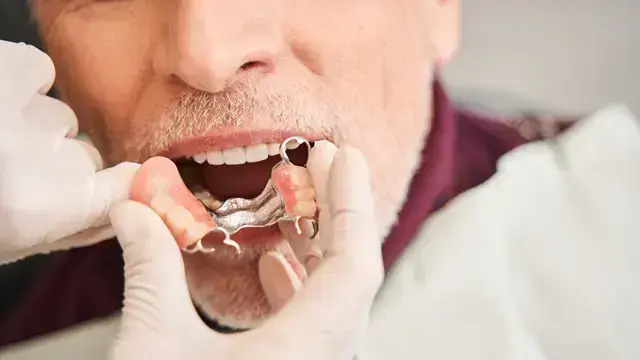
Dentures are removable dental appliances used to replace some or all missing teeth and restore chewing, speech, and appearance.
Schedule a ConsultationDentures in Seoul
Medically reviewed by Dr. Kim Jeong-chan, Representative Director and Head Dentist, Dongdaemun Dental Clinic, Seoul
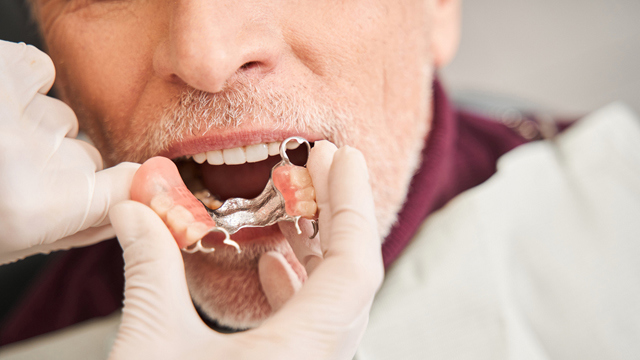
Dentures are removable dental appliances used to replace some or all missing teeth and restore chewing, speech, and appearance. At Dongdaemun Dental Clinic in Seoul, denture work is supported by digital intraoral scanning and a CAD/CAM-supported manufacturing workflow, with fabrication handled by the clinic's own dental laboratory, in operation since 2003.
What Dentures Do
Replacing missing teeth benefits both appearance and health. The American Dental Association makes the functional case directly: dentures make it easier to eat and to speak better than you could without teeth — things people often take for granted. When all the teeth are lost, the facial muscles can sag and make a person look older, and dentures help fill out the appearance of the face and profile.
The clinic frames the same benefits as restoring basic chewing ability, improving speech clarity, rebuilding facial fullness, and offering a cost-effective, non-surgical approach to extensive tooth loss.
Why Patients Travel to Seoul for Dentures
Patients travelling from abroad for denture treatment are typically seeking the same basic outcome: restored ability to eat and speak normally. The clinic describes the underlying reasons plainly — patients look for a way to regain basic masticatory function, restore clear speech, prevent the facial sagging caused by missing teeth, and find an affordable solution for widespread or total tooth loss. For someone who has lost most or all of their natural teeth, these are not cosmetic preferences; they affect nutrition, communication, and day-to-day confidence.
Affordability sits alongside those functional concerns rather than instead of them. Denture treatment is one of the few solutions for extensive tooth loss that does not require implant surgery, which keeps both the procedure and the recovery simpler for patients who are older, have limited bone density, or would rather avoid a surgical pathway altogether. That combination — functional restoration without surgery, at a lower cost than full-arch implant treatment — is why dentures remain a first-line option for many international patients rather than a last resort.
Who Dentures Suit
The clinic identifies ideal candidates as:
Individuals missing multiple teeth or an entire arch.
Patients with weak jawbones unsuitable for immediate full-arch implant surgery.
Elderly patients looking for a non-invasive tooth replacement option.
That second group matters. Where the jawbone cannot currently support implants, dentures are not a consolation prize — they are the appropriate treatment for the anatomy as it actually is.
Who they may not suit immediately. Active oral disease, severely compromised supporting tissues, or an inability to maintain denture hygiene may require treatment or stabilisation first. A dental examination is required before fabrication, and remaining teeth, gums, infections, or extractions may need treatment beforehand.
Your First Visit: Consultation and Diagnosis
Denture treatment begins with a consultation rather than an impression appointment. The dentist evaluates the teeth, gums, jaw, and bite, discusses the patient's functional and cosmetic needs, and determines the appropriate denture design from that assessment — conventional, immediate, partial, or overdenture — before any fabrication steps begin. This diagnostic step is what allows the clinic to identify, ahead of time, whether extractions, gum treatment, or bone-related preparation are needed first, rather than discovering a complication mid-treatment.
Types of Denture
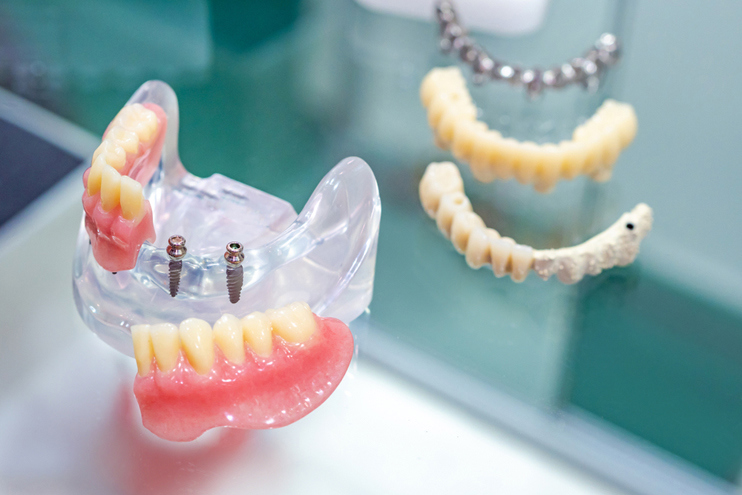
The ADA describes three principal types, which differ mainly in timing relative to extraction:
Type | When it is placed | Notes |
|---|---|---|
Conventional | After remaining teeth are removed and tissues have healed | Healing may take several months |
Immediate | Same day the remaining teeth are removed | Measurements and jaw models taken at a preliminary visit; you are not without teeth during healing, but the denture may need relining or remaking once the jaw has healed |
Overdenture | Fits over a small number of prepared remaining natural teeth | Preserving some teeth helps maintain jawbone and adds stability and support. Implants can serve the same function |
The clinic's own menu covers complete dentures and partial dentures, the latter for patients who retain some natural teeth.
Quality and Safety Behind Every Case
Regardless of whether a case is a partial or a complete denture, it runs through the same clinic-wide quality control approach: a one-instrument-set-per-patient sterilization policy (no reuse without sterilization) and digital diagnosis for accuracy, delivered by Seoul National University-trained dentists using the CEREC Primescan intraoral scanner described above.
How Dentures Are Made Here
The clinic follows a staged fabrication sequence:
Primary impressions of the upper or lower arch are taken.
Wax bite registration determines proper jaw alignment.
Custom trial dentures are created for fit testing.
Final fabrication is completed in the dental laboratory.
Precise fitting adjustments are made.
Each stage exists because a denture is a load-bearing appliance that has to work against soft, moving tissue. Getting the bite alignment right at stage two determines whether the finished appliance distributes force evenly; skipping the trial stage means discovering a fit problem only after the final appliance has been made.
Local anaesthesia is generally unnecessary for basic denture fittings, unless preparatory tooth extractions or minor soft-tissue surgery are required before impressions are taken.
Technology and Technique
Denture fabrication relies on precision impression materials, acrylic resin base materials, dental articulators that mimic jaw movements, and digital intraoral scanners for modern CAD/CAM denture manufacturing. The clinic uses the CEREC Primescan 3D intraoral scanner from Dentsply Sirona clinic-wide.
The clinic's fabrication technique focuses on three things:
Custom border moulding to achieve strong suction stability.
Custom tooth shade matching.
Precise bite calibration tailored to individual facial features.
Having the dental laboratory in-house since 2003 keeps that fabrication under the clinic's own control rather than outsourced, which matters most at the adjustment stage, when small changes are made repeatedly against a patient's actual fit.
What to Expect After Fitting
Adjustment takes time, and knowing that in advance makes the first weeks considerably easier.
The clinic notes adaptation typically takes two to four weeks as the oral muscles adapt, with minor pressure points corrected through periodic post-placement clinical adjustments.
The ADA describes the same period in more detail: new dentures may feel awkward for a few weeks until you become accustomed to them; they may feel loose while the muscles of the cheek and tongue learn to keep them in place; it is not unusual to experience minor irritation or soreness; and saliva flow may temporarily increase. As the mouth adapts, these problems should resolve. Follow-up appointments are generally needed after insertion so the fit can be checked and adjusted — and if any problem persists, particularly irritation or soreness, the dentist should be consulted.
Possible issues the clinic identifies include initial soreness, pressure points, difficulty adapting, reduced stability, altered speech, and gum irritation.
Caring for Dentures
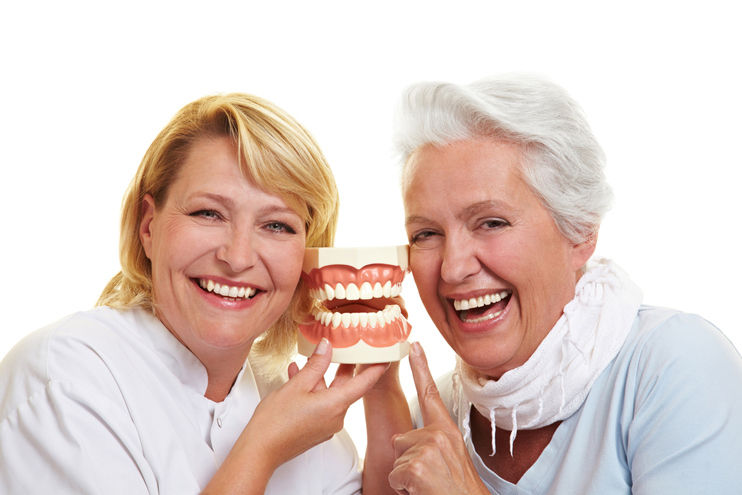
Good hygiene remains necessary even with full dentures. The ADA's guidance:
Brush your gums, tongue, and roof of your mouth every morning with a soft-bristled brush before inserting dentures, to stimulate circulation and help remove plaque.
Rinse dentures before brushing to remove loose food or debris.
Use a soft-bristle brush and a non-abrasive cleanser on all surfaces so the denture does not get scratched.
Clean the mouth thoroughly — gums, cheeks, roof of the mouth, tongue — to reduce the risk of oral irritation and bad breath.
When not wearing them, keep dentures in a safe place covered in water to prevent warping.
If using adhesives, follow the instructions exactly. Your dentist can recommend suitable cleansers and adhesives; look for products with the ADA Seal of Acceptance.
Contact your dentist if the dentures stop fitting well or become damaged, and keep scheduling regular checkups so the fit can be examined.
Longevity
Function improves as the patient adapts. Dentures can last several years, but may require adjustment, relining, repair, or replacement as the mouth changes. That is expected rather than a failure — the underlying ridge and soft tissue continue to change over time, and an appliance that fitted well initially will eventually need attention.
Dentures Compared with the Alternatives
Alternatives include dental bridges and implant-supported restorations. Compared with implants, conventional dentures are removable and do not require implant surgery — which is precisely why they suit patients whose jawbone or general health makes surgery inadvisable.
Dentures may also be combined with other treatment when clinically appropriate: tooth extractions, periodontal treatment, restorations, or implants. For patients considering implants eventually, that combination matters — an overdenture supported by implants is a recognised middle path, and the clinic performs implant treatment under the same roof, directed by Dr. Kim Jeong-chan, who has 30 years of implant surgery experience.
Planning Your Visit as a US or International Patient
Conventional dentures generally require several appointments for examination, impressions or scans, fitting, delivery, and adjustments. Anyone travelling for treatment should plan against that sequence rather than a single visit, and discuss timing at the consultation stage.
A few practical points matter most for patients coming from the US:
Getting here. US patients typically fly into Incheon (ICN) or Gimpo (GMP); direct flights operate from many US hubs (roughly 13–15 hours). From Incheon, the clinic is reachable by AREX train plus subway to Dongdaemun Station (Lines 1 and 4), Exit 9. US passport holders can generally enter Korea visa-free for short stays via K-ETA — confirm current entry requirements before booking.
Why US patients pursue treatment here. International patients most often seek dentures to regain basic chewing function, restore clear speech, prevent the facial sagging that follows widespread tooth loss, and reach an affordable, non-surgical solution for extensive tooth loss.
Trust and credentials. The clinic addresses the two questions US patients raise most: dentist qualifications (all SNU-trained; the director is a former SNU adjunct professor) and English-language support (a dedicated translation service).
Staying in touch after you leave. Phone and KakaoTalk contact are available during clinic hours (KST) for follow-up questions after returning home.
Language support. English, Japanese, and Chinese translation service is available for international patients throughout the visit.
Why Dongdaemun Dental Clinic
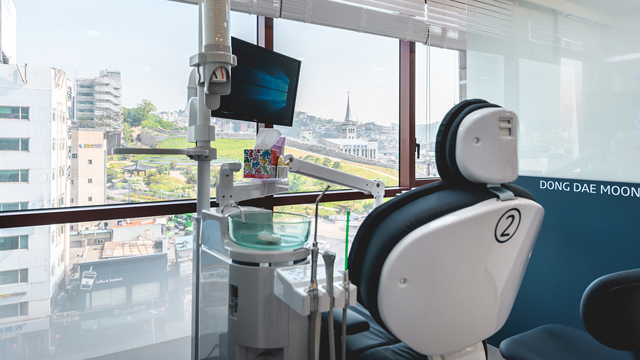
Digital intraoral scanning and a CAD/CAM-supported denture manufacturing workflow.
An in-house dental laboratory operating since 2003.
Dentists all trained at Seoul National University.
Around 30 years of practice in the Dongdaemun area, with over 75% of new patients arriving by referral.
English, Japanese, and Chinese translation service for international patients.
The Bottom Line
Dentures replace some or all missing teeth and restore chewing, speech, and facial fullness.
Conventional, immediate, and overdenture types differ mainly in timing relative to extraction.
Fabrication runs through impressions, bite registration, trial fitting, laboratory fabrication, and adjustment.
Adaptation typically takes two to four weeks, with pressure points corrected at follow-up visits.
Dentures last several years but need adjustment, relining, or replacement as the mouth changes.
Frequently Asked Questions
Will dentures change how I look? They are designed to help. The ADA notes that losing all your teeth allows facial muscles to sag, making a person look older, and that dentures help fill out the appearance of the face and profile. They can be made to closely resemble your natural teeth so your appearance does not change much.
How long until they feel normal? The clinic indicates two to four weeks as oral muscles adapt. During that period the ADA notes dentures may feel awkward or loose while the cheek and tongue muscles learn to hold them, minor irritation or soreness is not unusual, and saliva flow may temporarily increase.
What if they hurt or keep slipping? Minor pressure points are expected and are corrected through periodic post-placement adjustments. If a problem persists — particularly irritation or soreness — contact the dentist rather than waiting it out or relying on adhesive to mask it.
Do I still need to clean my mouth if I have full dentures? Yes. Brush your gums, tongue, and the roof of your mouth every morning with a soft-bristled brush before inserting dentures, and clean the dentures daily with a soft brush and non-abrasive cleanser.
How should I store them? When not being worn, keep them in a safe place covered in water so they do not warp.
Are dentures better or worse than implants? They answer different situations. Dentures are removable and require no implant surgery, which makes them suitable where the jawbone is weak or surgery is inadvisable. Implants are fixed and surgical. An overdenture supported by remaining teeth or implants sits between the two.
How many visits will I need? Conventional dentures generally require several appointments covering examination, impressions or scans, fitting, delivery, and adjustments. Plan travel around that sequence.
How long will they last? Several years, though they may need adjustment, relining, repair, or replacement as the mouth changes over time. Regular checkups let the dentist confirm the fit is still correct.
What's the real difference between a partial and a complete denture? It comes down to how many natural teeth remain. A partial denture suits patients who retain some natural teeth; a complete denture replaces an entire arch once teeth are missing altogether. The clinic offers both as separate treatment paths.
How do I stay in touch with the clinic after I fly home? Phone and KakaoTalk contact are available during clinic hours (Korea Standard Time) for follow-up questions once you have returned home.
What the Clinic Can and Cannot Promise
Denture claims are kept deliberately modest. Dentures replace missing teeth and help restore chewing ability, speech, and appearance — that is the extent of what can honestly be said in advance. The clinic does not promise a permanent fit, permanent comfort, or a guaranteed cosmetic result, because ridge and soft-tissue change over time is a normal biological process that no denture design can prevent indefinitely.
That framing matters for setting expectations before treatment starts. A denture that fits well at delivery may need relining or adjustment months or years later — not because the fabrication was flawed, but because the mouth itself continues to change. Patients who understand that going in tend to have a smoother adjustment period and a more realistic sense of what dentures can and cannot do for them over the long term.
I'm not a candidate for implants right now — are dentures still a good option? Yes. The clinic lists patients with weak jawbones unsuitable for immediate full-arch implant surgery as one of the groups dentures are designed for. In that situation dentures are not a fallback — they are the appropriate treatment for the anatomy as it currently stands, and implant-supported options can be revisited later if the jawbone becomes suitable.
Book a Consultation at Dongdaemun Dental Clinic
To discuss complete or partial dentures, contact Dongdaemun Dental Clinic in Seoul. The clinic is open Monday to Friday 10:00 AM–6:00 PM KST with a lunch break from 12:00 PM to 1:00 PM, and Saturday 10:00 AM–2:00 PM KST, closed Sundays and public holidays. Enquire through the contact page or by telephone on +82-2-2268-9529.
Disclaimer
This page is for general informational purposes and does not constitute individualized medical advice. Candidacy, technique, and expected outcomes can only be determined through a consultation with a qualified dentist.
Sources & Further Reading
Related Services
Dental procedures available within our specialized departments.
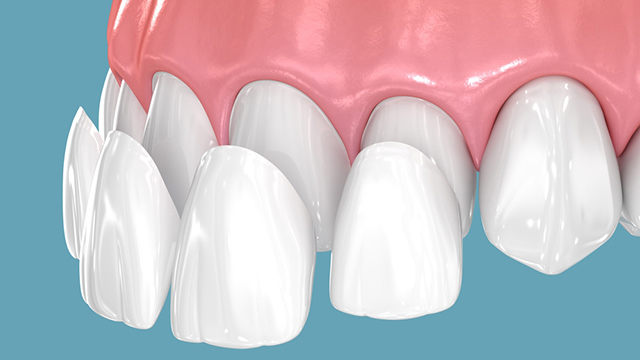
Laminate (Veneers)
Laminate veneers are thin, custom shells — usually ceramic — bonded to the front surface of teeth to improve their color, shape, size, or minor alignment, mainly in the visible smile zone.
Learn More
Bone-Regenerating Implants
Bone-regenerating implants involve a bone transplant procedure that adds bone material to areas with insufficient bone, helping create a suitable foundation for dental implant placement.
Learn More
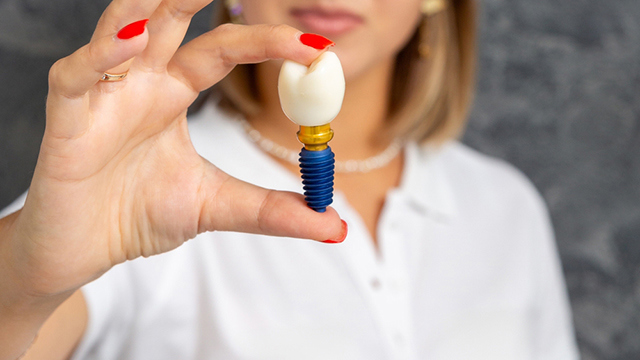
Bone Graft Implants
Bone graft implant treatment addresses one of the most common obstacles to getting a dental implant: not having enough bone to hold one securely.
Learn More