Trusted Dental Care in Seoul Since 1997 · SNU Dental Alumni · Multilingual Concierge


Specialty Overview
Orthodontics
Orthodontics corrects uneven or irregular teeth caused by malocclusion — including protruding teeth, facial asymmetry, and prognathism.
Schedule a ConsultationOrthodontics in Seoul

Medically reviewed by Dr. Kim Jeong-chan, Representative Director and Head Dentist, Dongdaemun Dental Clinic, Seoul
Orthodontics corrects uneven or irregular teeth caused by malocclusion — including protruding teeth, facial asymmetry, and prognathism — through non-surgical orthodontic correction that rearranges teeth into proper alignment. At Dongdaemun Dental Clinic in Seoul, orthodontic care includes clear aligner treatment using transparent, removable appliances, planned with consideration for each patient's gum health.
What Orthodontics Corrects
Malocclusion is not a single problem — it covers a range of bite and alignment issues. The clinic treats uneven or irregular teeth caused by protruding teeth, facial asymmetry, and prognathism, rearranging teeth into proper alignment to improve overall dental appearance without surgery.
Patients pursue orthodontic treatment to straighten uneven teeth, correct malocclusion, and — where clear aligners are the chosen option — to do so with a less noticeable appliance than conventional braces.
Who Orthodontics Suits
The clinic identifies suitable candidates as patients with uneven or irregular teeth, malocclusion, protruding teeth, facial asymmetry, or prognathism who are candidates for correction without surgery and are interested in clear aligners specifically.
Both treatment paths available at the clinic have their own candidacy profile:
Braces suit people with malocclusions such as protruding teeth, crowding, or bite problems, including more complex cases that need a fixed appliance to manage.
Clear aligners suit people with mild-to-moderate alignment issues who prefer a removable, near-invisible option and are able to wear the aligners consistently — since aligner treatment depends on patient compliance in a way fixed braces do not.
That compliance distinction is worth taking seriously before choosing a path: an aligner left in its case rather than in the mouth cannot move teeth, which is why the clinic frames candidacy for aligners around a patient's realistic ability to wear them as prescribed, not simply the severity of the misalignment.
Your First Visit: Registration, Questionnaire, and Diagnosis
Treatment begins with registration, a pre-treatment questionnaire, and a one-on-one consultation to assess dental health. A detailed examination follows, using precision diagnostic equipment and clinical evaluation to accurately identify the problem and establish a treatment plan.
That sequence matters because orthodontic planning is not one-size-fits-all: the clinic's own clear aligner technique is built specifically around considering each patient's gum condition throughout treatment, prioritizing gum health alongside tooth alignment rather than treating alignment in isolation.
Braces or Clear Aligners — How the Clinic Compares Them
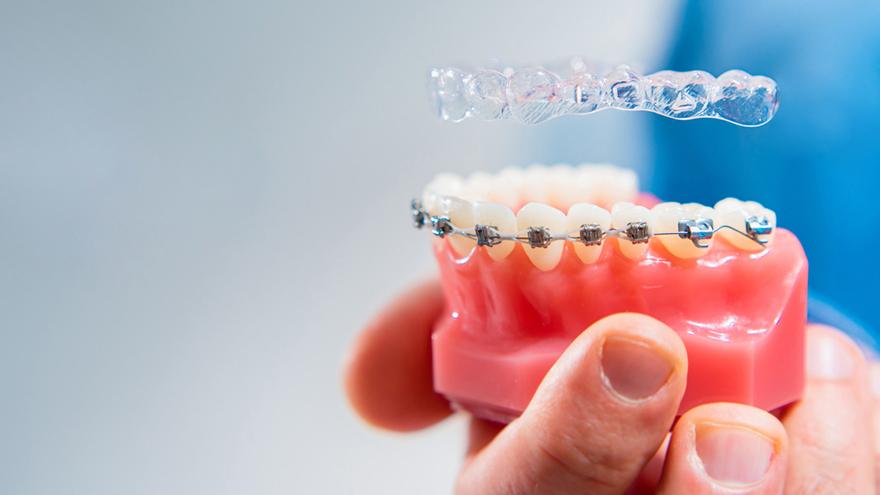
The clinic frames the choice around visibility, removability, and treatment scope rather than presenting one option as universally better.
Conventional Braces | Clear Aligners | |
|---|---|---|
Appearance | Visible brackets attached to the teeth | Transparent, inconspicuous |
Removability | Fixed for the duration of treatment | Removable for eating and brushing |
Typical duration | About 12–36 months, depending on complexity and compliance | Commonly 6–18 months, depending on severity |
Comfort | Brackets and wires can cause more irritation | Generally less pain and irritation since there are no wires or brackets |
Hygiene routine | Requires a dedicated orthodontic toothbrush | Normal brushing is possible after removing the aligner |
Best suited for | A wide range of alignment problems, including more complex cases | Mild-to-moderate alignment issues in patients who will wear them consistently |
Clear aligners are also described as generally requiring fewer dental visits than conventional braces, though both paths use follow-up appointments to track progress. Noticeable improvement with braces is often visible within the first three to six months of starting treatment; with aligners, small changes can become noticeable during the first few months, though tooth movement is gradual and the full result builds progressively as the prescribed series of aligners is completed.
How Treatment Proceeds
For clear aligner treatment, the clinic follows this sequence:
Registration, questionnaire, and consultation.
Detailed examination using precision diagnostic equipment and clinical evaluation.
Customized clear aligners are fabricated based on the diagnostic results.
The first aligner is checked for fit, after which the patient replaces aligners periodically and wears them independently.
Regular follow-up visits monitor treatment progress — typically scheduled every one to two months, though some cases are reviewed every six months.
For braces, adjustment appointments continue throughout active treatment at a frequency the orthodontist determines, and the final result is reached once the active alignment phase is complete, brackets are removed, and a retainer is fitted to stabilize the teeth.
Technology Used
The clinic uses the CEREC Primescan three-dimensional digital scanner to capture fast, precise oral scans without the discomfort of conventional rubber impression materials — a benefit that applies to orthodontic diagnostics as it does elsewhere in the clinic's digital workflow. Digital scanning supports computer-assisted treatment planning for clear aligners, letting the clinic map the planned tooth movements before fabrication begins.
Modern clear-aligner treatment generally relies on digital intraoral scanning, computer-assisted treatment planning, 3D modeling, and customized aligners, with attachments added to individual teeth where extra grip is needed to move them as planned. That digital pipeline is also what lets the clinic review a case again mid-treatment if progress needs adjusting, rather than relying on manual impressions at every step.
Comfort, Recovery, and Aftercare
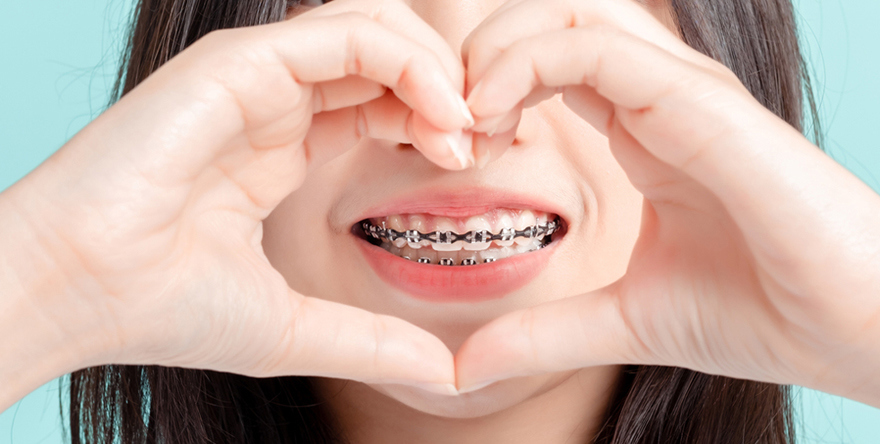
Neither braces nor aligners are generally described as a painful procedure. Braces are usually comfortable at placement, with temporary pressure or soreness after adjustments; clear aligners tend to cause less irritation because there are no wires or brackets, though mild pressure is common with each new tray.
Following clear aligner fitting, the clinic advises patients to eat soft foods for approximately two to three days. Aftercare guidance includes:
Eat soft foods for two to three days after treatment.
Avoid tough or hard foods such as gum and dried squid.
Avoid chewing hard objects that place excessive force on the teeth.
Do not touch the orthodontic appliance with your tongue or fingers.
Attend scheduled follow-up appointments.
For braces, patients are advised to avoid very hard, sticky, or excessively chewy foods that can damage brackets or wires, and to maintain careful oral hygiene around the fixed appliance throughout treatment.
Preparing for Treatment
Before starting, have a dental and orthodontic examination, treat any cavities or gum disease, complete recommended imaging, and maintain good oral hygiene. Active gum disease, untreated cavities, or poor oral hygiene may need treatment or stabilization before braces or aligners begin — this is exactly why the clinic's consultation stage includes a full gum-health assessment rather than looking only at tooth position. Patients should also tell the dentist about any previous orthodontic treatment, dental implants, crowns, bridges, or other significant dental work, since these can affect treatment planning.
Depending on the case, the clinic may request recent dental records, panoramic or orthodontic X-rays, photographs of the teeth and face, and previous treatment records to plan treatment accurately. A digital intraoral scan using the CEREC Primescan reduces the need for the conventional impression trays some patients find uncomfortable.
Risks and Realistic Expectations
Braces carry risks that include tooth decay, gum problems, root shortening, enamel changes, unwanted tooth movement, and relapse if a retainer is not worn as directed. Clear aligners carry a related but distinct set of risks: unwanted tooth movement, bite changes, gum irritation or recession, root shortening in some cases, decay associated with poor oral hygiene, and the treatment simply not achieving the planned result if aligners are not worn as prescribed.
The clinic reduces risk through detailed clinical examination and precision digital diagnosis, care from Seoul National University–trained dentists, and a one-instrument-set-per-patient sterilization policy.
What cannot be guaranteed. No orthodontic provider can guarantee an exact treatment duration, a specific final appearance, permanent alignment without any relapse, or that every tooth will move exactly as digitally predicted. Long-term retention is generally necessary to reduce the chance of teeth shifting back after treatment ends.
Combining Orthodontics With Other Treatment
Orthodontic treatment can be combined with fillings, gum treatment, extractions, professional cleaning, or restorative and surgical procedures when clinically necessary. Any active dental disease is generally addressed before or alongside orthodontic treatment rather than afterward.
Who Provides Your Care
|
|
Dr. Kim Jeong-chan, Representative Director | Dr. Huh Byeong-soo, Master's Degree in Dentistry |
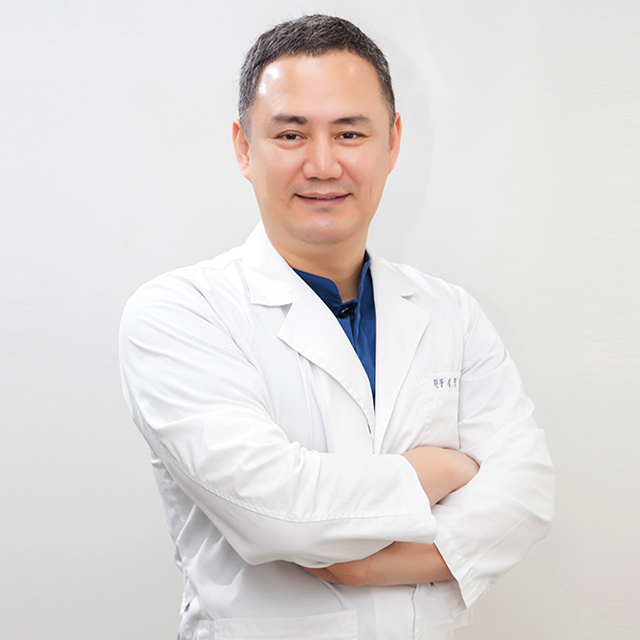
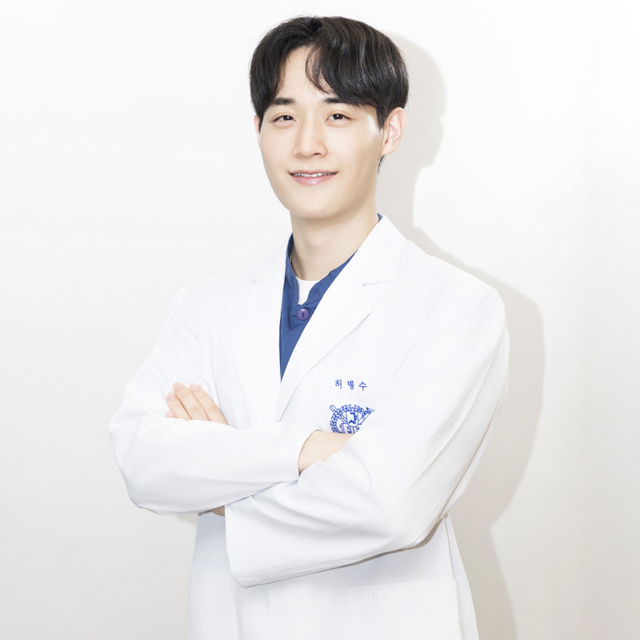
Dentists at Dongdaemun Dental Clinic are all Seoul National University-trained. The clinic is led by representative director Dr. Kim Jeong-chan, whose periodontology background and roughly 30 years of clinical experience inform the gum-health-first approach the clinic takes to clear aligner planning. Dr. Heo Byung-soo, Director, also practices at the clinic, holding a Master of Science in Dentistry from SNU.
That periodontics grounding is not incidental to orthodontic planning. Moving teeth through bone puts direct load on the surrounding gum and ligament tissue, which is why a clinic built around periodontal training treats gum condition as part of the orthodontic exam rather than a separate concern to be addressed only if a problem appears later.
What Makes the Clinic Different
The clinic names orthodontics among its top five best-known procedures, alongside implant repair and revision surgery, dental implants, bone-graft implants, and wisdom-tooth or cavity treatment — placing it firmly inside the clinic's core expertise rather than a peripheral service. Over 75% of new patients are reported to arrive by referral, which the clinic attributes to its Seoul National University-trained dentist team, roughly 30 years of practice in the Dongdaemun area, and a digital, in-house-lab-supported treatment workflow that keeps most steps under one roof.
Why Dongdaemun Dental Clinic

Orthodontics is one of the clinic's top procedures alongside implant repair, dental implants, bone-graft implants, and wisdom-tooth or cavity treatment.
Clear aligner planning is handled by experienced periodontists with specific attention to gum health, not tooth alignment alone.
The CEREC Primescan digital scanner is used clinic-wide for precise, comfortable diagnostics.
Dentists are all Seoul National University–trained.
English, Japanese, and Chinese translation service is available for international patients.
Over 75% of new patients arrive by referral.
Planning Your Visit as a US or International Patient
International patients most often weigh three questions before booking: whether the dentists are properly qualified, whether English support is available, and what happens if a concern arises after returning home. On the first two, the clinic's dentists are all SNU-trained and English translation service is offered; remote follow-up specifics should be confirmed directly with the clinic.
For travel planning: US patients generally fly into Incheon (ICN) or Gimpo (GMP), with direct flights from many US hubs taking roughly 13–15 hours; from Incheon, the clinic is reachable by AREX train plus subway to Dongdaemun Station (Lines 1 and 4), Exit 9. US passport holders can generally enter Korea visa-free for short stays via K-ETA, though current entry requirements should be confirmed before booking. An online consultation board is available before travel, and phone or KakaoTalk contact is available during clinic hours (KST) for follow-up questions after returning home.
The Bottom Line
Orthodontics corrects malocclusion — protruding teeth, facial asymmetry, prognathism — without surgery.
Braces suit a wider range of cases; clear aligners suit mild-to-moderate cases in patients who will wear them consistently.
Clear aligner planning specifically accounts for gum health, handled by experienced periodontists.
Typical duration is about 12–30 months for braces and 6–18 months for clear aligners.
Retention after treatment is generally necessary to prevent relapse.
Frequently Asked Questions
Will braces or clear aligners hurt? Braces are not typically painful at placement, though adjustments can cause temporary soreness. Clear aligners generally cause less irritation since there are no wires or brackets, though mild pressure is common with each new tray.
How long does treatment take? Braces typically run twelve to thirty months depending on complexity and compliance. Clear aligners commonly take six to eighteen months depending on severity.
Do I need surgery? No. Orthodontic correction at the clinic is non-surgical, addressing malocclusion by rearranging teeth into proper alignment.
How is treatment different from the alternative? Braces are fixed, use visible brackets and wires, and can treat a wider range of alignment problems. Clear aligners are transparent, removable for eating and brushing, and generally require fewer visits, but depend on the patient wearing them as prescribed.
What happens at the first visit? Registration, a pre-treatment questionnaire, and a one-on-one consultation, followed by a detailed examination with precision diagnostic equipment to establish the treatment plan.
How many follow-up visits will I need? Clear aligner check-ups are typically scheduled every one to two months, with some cases reviewed every six months. Braces require periodic adjustment appointments throughout active treatment.
What happens after treatment ends? For braces, a retainer is fitted once the active alignment phase is complete to stabilize the result. For aligners, retention is generally necessary to reduce the chance of teeth moving back.
Can orthodontics be combined with other dental work? Yes. It can be planned alongside fillings, gum treatment, extractions, professional cleaning, or restorative and surgical procedures when clinically necessary.
Can I have a consultation before I travel? Yes — the clinic offers an online consultation board that lets prospective patients discuss candidacy before committing to travel.
What if I have a concern after I return home? Patients can contact the clinic by phone at +82-2-2268-9529, or by KakaoTalk during clinic hours (KST).
Do I need a special toothbrush? With braces, yes — a dedicated orthodontic toothbrush is generally required to clean around the fixed brackets and wires. With clear aligners, normal brushing is possible once the tray is removed, since there is no fixed hardware to clean around.
What technology is used to plan my treatment? The clinic's CEREC Primescan digital scanner captures a precise 3D scan of the mouth, which feeds into computer-assisted planning and, for clear aligners, the fabrication of a customized series of trays.
Book a Consultation at Dongdaemun Dental Clinic
To discuss braces or clear aligner orthodontics, contact Dongdaemun Dental Clinic in Seoul. The clinic is open Monday to Friday 10:00 AM–6:00 PM KST with a lunch break from 12:00 PM to 1:00 PM, and Saturday 10:00 AM–2:00 PM KST, closed Sundays and public holidays. Enquire through the contact page or by telephone on +82-2-2268-9529.
Disclaimer
This page is for general informational purposes and does not constitute individualized medical advice. Candidacy, technique, and expected outcomes can only be determined through a consultation with a qualified dentist.
Sources & Further Reading
Related Services
Dental procedures available within our specialized departments.
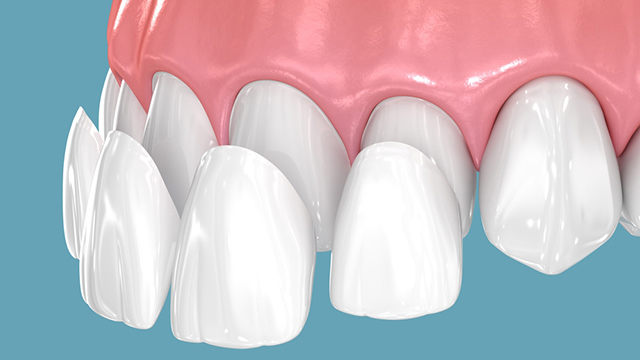
Laminate (Veneers)
Laminate veneers are thin, custom shells — usually ceramic — bonded to the front surface of teeth to improve their color, shape, size, or minor alignment, mainly in the visible smile zone.
Learn More
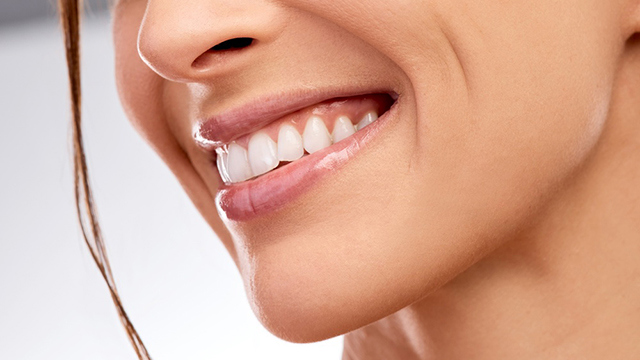
Bone-Regenerating Implants
Bone-regenerating implants involve a bone transplant procedure that adds bone material to areas with insufficient bone, helping create a suitable foundation for dental implant placement.
Learn More
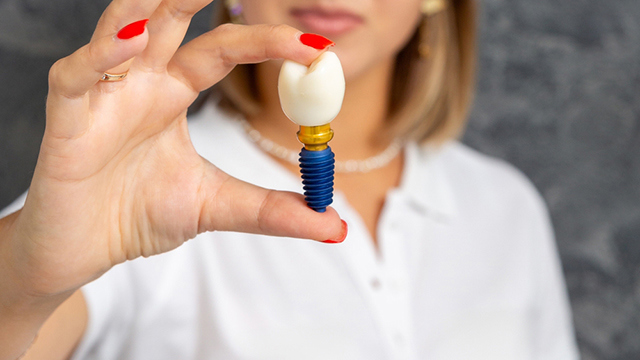
Bone Graft Implants
Bone graft implant treatment addresses one of the most common obstacles to getting a dental implant: not having enough bone to hold one securely.
Learn More