Trusted Dental Care in Seoul Since 1997 · SNU Dental Alumni · Multilingual Concierge

Specialty Overview
Teeth Whitening
Teeth whitening is a cosmetic dental treatment that lightens the natural colour of teeth by reducing stains and discolouration.
Schedule a ConsultationProfessional Teeth Whitening in Seoul
Medically reviewed by Dr. Kim Jeong-chan, Representative Director and Head Dentist, Dongdaemun Dental Clinic, Seoul
Teeth whitening is a cosmetic dental treatment that lightens the natural colour of teeth by reducing stains and discolouration. At Dongdaemun Dental Clinic in Seoul, whitening is carried out as a dentist-supervised, professional-grade protocol — which begins with an examination to establish whether whitening is the right answer for your particular kind of discolouration, because it is not the right answer for every kind.
Why Teeth Change Colour
Understanding the cause matters, because the cause determines whether whitening will work. The American Dental Association identifies several distinct mechanisms:
Food and drink. Coffee, tea, and red wine contain intense colour pigments called chromogens that attach to the enamel, the white outer part of the tooth.
Tobacco use. Tar is naturally dark, and nicotine — colourless on its own — turns yellowish once mixed with oxygen, producing stubborn surface staining.
Age. Beneath the hard white enamel is a softer, yellower layer called dentin. Over time the enamel thins with brushing, and more of the dentin shows through.
Trauma. A blow to the mouth can cause a tooth to lay down more dentin in response, darkening it from within.
Medications. Darkening can be a side effect of certain antihistamines, antipsychotics, and high blood pressure medicines. Children exposed to antibiotics such as tetracycline and doxycycline while their teeth are forming may show discolouration in their adult teeth later. Chemotherapy and head and neck radiation can also darken teeth.
The clinic's own framing aligns with this: patients typically seek whitening to improve smile brightness and reduce discolouration caused by foods, drinks, smoking, ageing, or other staining factors.
How Whitening Works
Whitening products contain one of two bleaches — hydrogen peroxide or carbamide peroxide. These break stains into smaller pieces, which makes the colour less concentrated and the teeth appear brighter. It is a chemical change to the stain, not a coating applied over the tooth.
Professional in-office whitening uses high-concentration peroxide gels paired with high-intensity LED or plasma activation lights, alongside custom-fitted tray fabrication systems for home maintenance.
Whitening Does Not Work on Everything
This is the single most important thing to establish before treatment, and it is why the clinic examines first. The ADA is direct about the limits:
Yellow teeth will probably bleach well.
Brown teeth may not respond as well.
Teeth with grey tones may not bleach at all.
Whitening will not work on caps, veneers, crowns, or fillings. Restorations do not respond to bleach the way natural enamel does, which means whitening around existing dental work can leave a mismatch.
It will not be effective where discolouration is caused by medications or a tooth injury.
If your discolouration falls into one of these categories, whitening is not a matter of trying harder or using a stronger gel — it is the wrong tool, and a consultation should say so plainly rather than proceeding.
Who Is a Good Candidate
The clinic identifies suitable candidates as adults with healthy teeth and gums, who have suitable natural-tooth discolouration and realistic expectations.
Certain conditions need addressing first. The clinic notes that patients with untreated cavities, active gum disease, significant tooth sensitivity, or restorations that need evaluation may require dental treatment before whitening. This ordering is not bureaucratic. Peroxide reaching a cavity or inflamed gum tissue is a different proposition from peroxide on sound enamel, and treating the underlying problem first protects both comfort and result.
The Consultation
Before any whitening is performed, the dentist:
Examines the teeth and gums.
Identifies the type and cause of the discolouration.
Checks for cavities or sensitivity.
Determines whether whitening is appropriate at all.
A dental examination is recommended first, with cavities, gum problems, or other oral conditions treated when necessary.
The Treatment
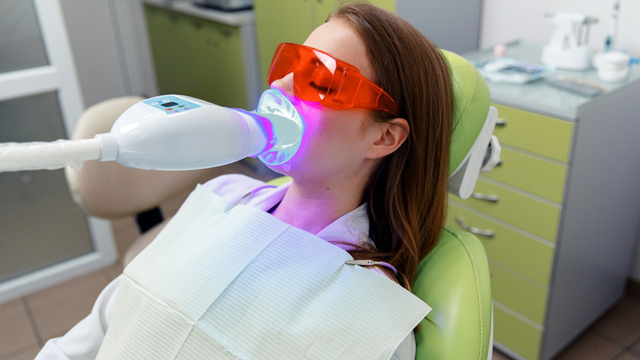
The procedure itself is straightforward: the teeth are examined and prepared, the whitening material is applied according to the selected method, and the treatment is completed after the recommended exposure period.
Anaesthesia is generally not required. Temporary tooth sensitivity or gum irritation can occur and usually settles after treatment.
Protocols vary by practice, ranging from single-visit high-concentration light-activated sessions through to combination therapy — pairing an initial in-office session with custom take-home whitening trays for enhanced shade longevity. Treatment time and the number of visits depend on the whitening method chosen and the degree of discolouration.
For context on the broader range of approaches, the ADA describes four categories: stain-removal toothpastes (which use mild abrasives and remove only surface stain without changing tooth colour), in-office chairside bleaching (usually one visit, with a protective gel or rubber shield placed over the gums before bleach is applied), at-home bleaching using a dentist-made custom tray, and over-the-counter products, whose bleaching agent concentration is lower than what a dentist uses in-office.
Comparing the Available Approaches
It helps to understand where professional in-office whitening sits relative to the alternatives, because they do different things at different strengths. The ADA groups them into four categories:
Approach | How it works | Practical notes |
|---|---|---|
Stain-removal toothpaste | Mild abrasives scrub surface stain | Does not change tooth colour — removes surface stain only. Look for the ADA Seal of Acceptance for stain removal |
In-office (chairside) bleaching | High-concentration bleach applied by the dentist | Usually one visit. A protective gel or rubber shield is placed over the gums first |
At-home trays from your dentist | Custom-made tray plus bleaching solution | Dentist sets the solution and wear time. Takes a few days to a few weeks |
Over-the-counter products | Lower-concentration bleach | Concentration is below what a dentist uses in-office. Discuss with your dentist and look for the ADA Seal |
The distinction between the first row and the rest is worth dwelling on. Stain-removal toothpastes cannot lighten the underlying colour of a tooth — they only lift what sits on the surface. If your concern is that the tooth itself has darkened rather than that it has picked up surface staining, no toothpaste will address it, regardless of marketing.
The two dentist-delivered options are frequently combined. The clinic's protocols range from a single-visit high-concentration light-activated session through to combination therapy, pairing that initial in-office session with custom take-home trays specifically to extend how long the result holds.
Why So Many People Ask About It
Whitening is consistently the most requested cosmetic dental improvement. When the American Academy of Cosmetic Dentistry asked people what they would most like to improve about their smile, the most common answer was whiter teeth, and the American Association of Orthodontists found that nearly 90% of patients requested tooth whitening. That level of demand is precisely why the ADA's caution about product selection and overuse matters — high demand attracts a great many unsupervised products, and the concentration and exposure control that make professional whitening predictable are exactly what those products lack.
What Results Are Realistic
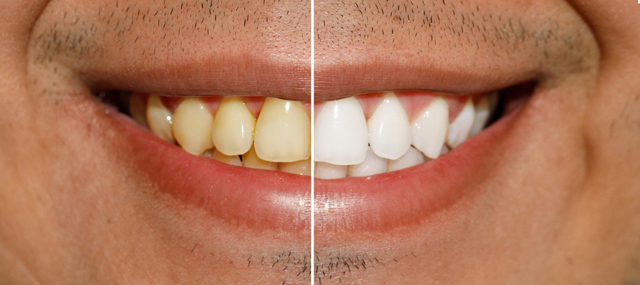
Whitening can make natural teeth visibly lighter and improve smile brightness — but the degree of whitening varies according to the original tooth colour and the type of staining. Teeth can appear brighter immediately or progressively, depending on the method used.
Two honest caveats belong here:
Results are not permanent. They gradually fade with diet, habits, and ageing. Whitening is a maintainable state rather than a one-time fix.
No specific shade can be guaranteed. The clinic's own approved claims are explicit that guarantees of a particular shade or of permanent results should be avoided. A consultation should give you a realistic expectation for your teeth, not a promised number on a shade guide.
Side Effects and Risks
The most common side effects are temporary sensitivity and gum irritation.
The ADA explains the mechanism: sensitivity happens when peroxide passes through the enamel to the softer dentin layer and irritates the nerve of the tooth. In most cases it is temporary, and treatment can be delayed and then resumed.
Overuse is a genuine risk. Both the clinic and the ADA note that overuse or inappropriate application can increase sensitivity, irritate oral tissues, and damage tooth enamel or gums. This is a substantial part of the argument for dentist supervision: the concentration is higher than over-the-counter products, and the exposure period is controlled rather than left to the patient's judgement.
Recovery and Aftercare
There is generally little to no downtime, and sensitivity, when present, usually improves after treatment.
Aftercare is simple:
Follow the dentist's instructions.
Maintain good oral hygiene.
Limit strongly staining foods and drinks immediately after treatment when advised.
That last point is worth taking seriously in the first period after whitening, given that the same chromogens in coffee, tea, and red wine that caused the original staining are still present in the diet.
Why Patients Choose Dongdaemun Dental Clinic

Whitening is performed as a dentist-supervised, professional-grade protocol, not a retail product.
The clinic's dentists are all Seoul National University–trained.
The clinic has operated in the Dongdaemun area for around 30 years, with an in-house dental laboratory running since 2003.
Over 75% of new patients arrive by referral.
English, Japanese, and Chinese translation service is available for international patients.
The Bottom Line
Whitening uses hydrogen peroxide or carbamide peroxide to break down stains, making tooth colour less concentrated.
It works well on yellow discolouration, less well on brown, and may not work at all on grey — and never on crowns, veneers, or fillings.
Good candidates are adults with healthy teeth and gums and realistic expectations.
Cavities, gum disease, and sensitivity are treated before whitening, not alongside it.
Temporary sensitivity is the most common side effect; results are real but not permanent.
Frequently Asked Questions
Will whitening work on my teeth? It depends on the cause of the discolouration. Yellow teeth generally bleach well, brown teeth may respond less, and grey-toned teeth may not bleach at all. Whitening also will not work on caps, veneers, crowns, or fillings, or where the discolouration was caused by medication or injury. The consultation identifies which category applies to you.
Why do I need an examination first? Because whitening is not appropriate for every mouth or every kind of stain. The dentist examines the teeth and gums, identifies the type and cause of discolouration, and checks for cavities or sensitivity before deciding whether to proceed. Untreated cavities, active gum disease, or significant sensitivity generally need treating first.
Does it hurt? Anaesthesia is generally not required. Some people experience temporary tooth sensitivity or gum irritation, which usually settles after treatment. The ADA explains this happens when peroxide reaches the dentin and irritates the tooth nerve, and notes it is temporary in most cases.
How long do the results last? Results are not permanent. They fade gradually with diet, habits, and ageing. Some protocols pair an in-office session with custom take-home trays specifically to extend shade longevity.
Can I just use an over-the-counter kit instead? You can, and the ADA suggests discussing options with your dentist and choosing a product carrying the ADA Seal of Acceptance. The concentration of bleaching agent in over-the-counter products is lower than what a dentist uses in-office, and overuse of any whitener can damage enamel or gums.
How many visits will I need? Treatment time and the number of visits depend on the method selected and the degree of discolouration. Protocols range from a single-visit high-concentration light-activated session to a combination of in-office treatment plus take-home trays.
Can you guarantee a particular shade? No, and any clinic that does should be treated with caution. The degree of whitening varies according to your original tooth colour and the type of staining. The clinic's own standards state that guarantees of a specific shade or of permanent results should be avoided.
What should I avoid straight after treatment? Follow the dentist's specific instructions, maintain good oral hygiene, and limit strongly staining foods and drinks immediately afterwards where advised — coffee, tea, and red wine being the common culprits.
Book a Consultation at Dongdaemun Dental Clinic
To find out whether professional whitening suits your teeth, book an examination at Dongdaemun Dental Clinic in Seoul. The clinic is open Monday to Friday 10:00 AM–6:00 PM KST with a lunch break from 12:00 PM to 1:00 PM, and Saturday 10:00 AM–2:00 PM KST, closed Sundays and public holidays. Enquire through the contact page or by telephone on +82-2-2268-9529.
Disclaimer
This page is for general informational purposes and does not constitute individualized medical advice. Candidacy, technique, and expected outcomes can only be determined through a consultation with a qualified dentist.
Sources & Further Reading
Related Services
Dental procedures available within our specialized departments.
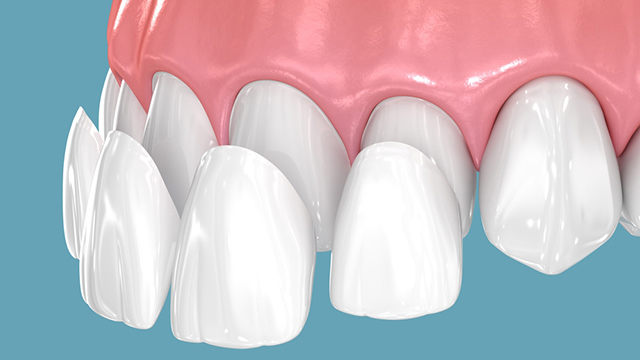
Laminate (Veneers)
Laminate veneers are thin, custom shells — usually ceramic — bonded to the front surface of teeth to improve their color, shape, size, or minor alignment, mainly in the visible smile zone.
Learn More
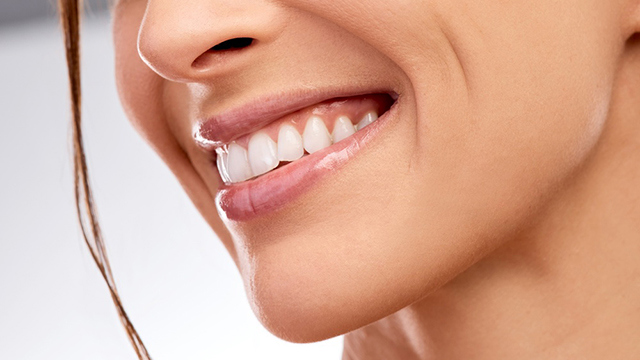
Bone-Regenerating Implants
Bone-regenerating implants involve a bone transplant procedure that adds bone material to areas with insufficient bone, helping create a suitable foundation for dental implant placement.
Learn More
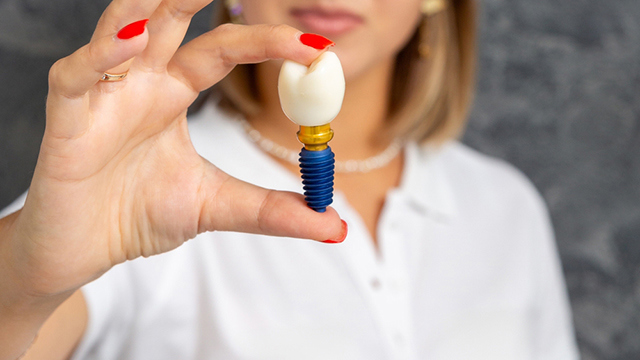
Bone Graft Implants
Bone graft implant treatment addresses one of the most common obstacles to getting a dental implant: not having enough bone to hold one securely.
Learn More